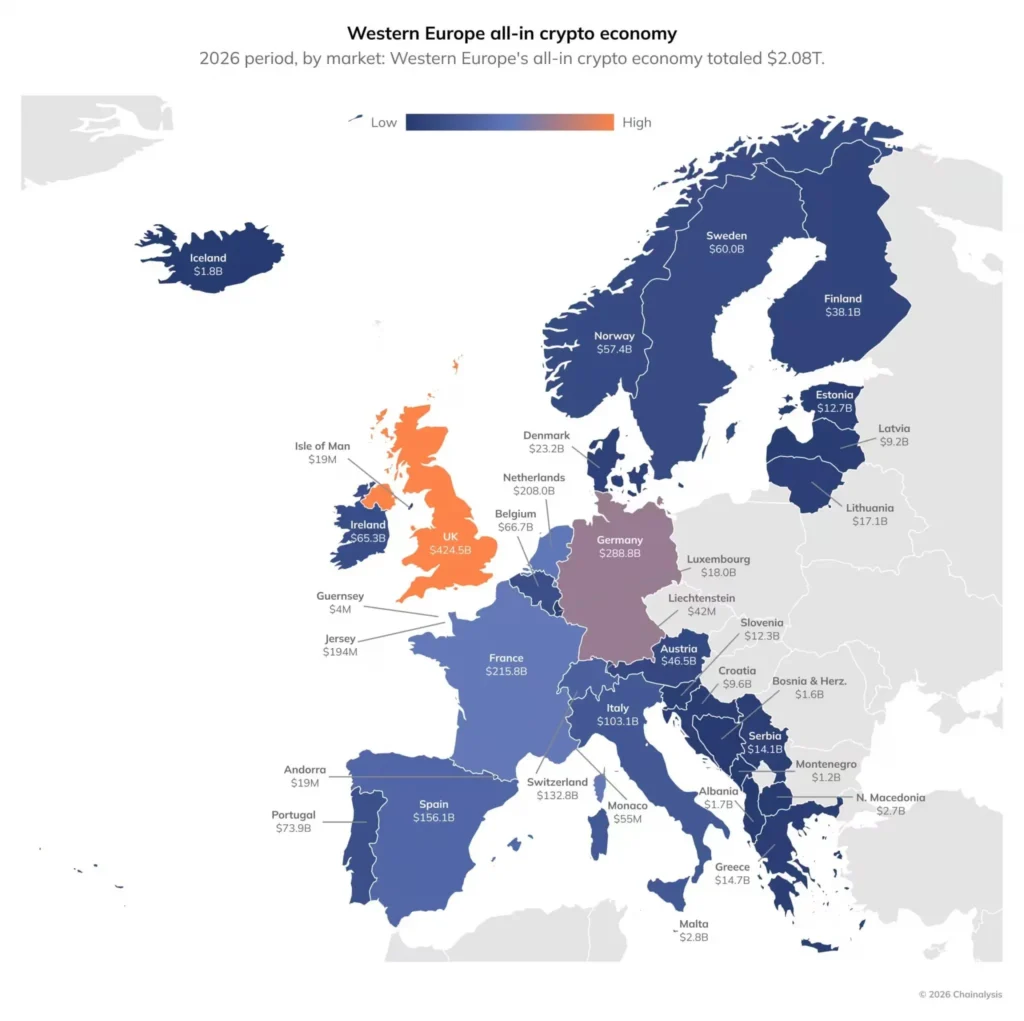
Historical report: published November 10, 2026, at 23:17 (UTC+8). The figures below describe the July 2025–June 2026 study period unless otherwise noted.
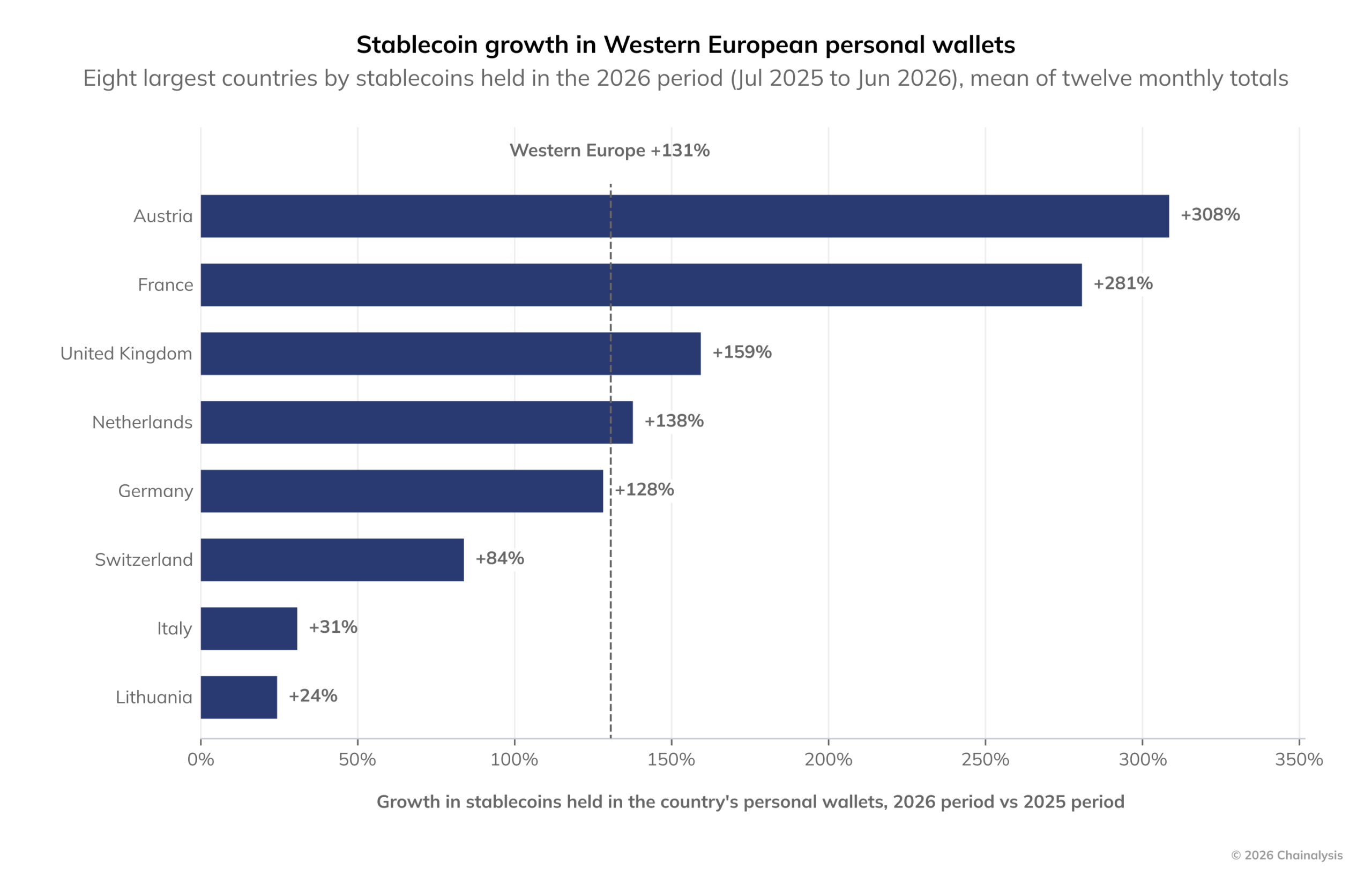
Chainalysis reported that stablecoin balances in individual wallets rose in every Western European country it studied. Across the region, those holdings increased 131%, compared with 52% globally. Western Europe’s share of the global total rose from 3.4% to 5.1%, with particularly strong growth in Austria and France. These are wallet-holding figures, not measures of issuer reserves or evidence that a token can always be redeemed.
UK: more transfers within the country
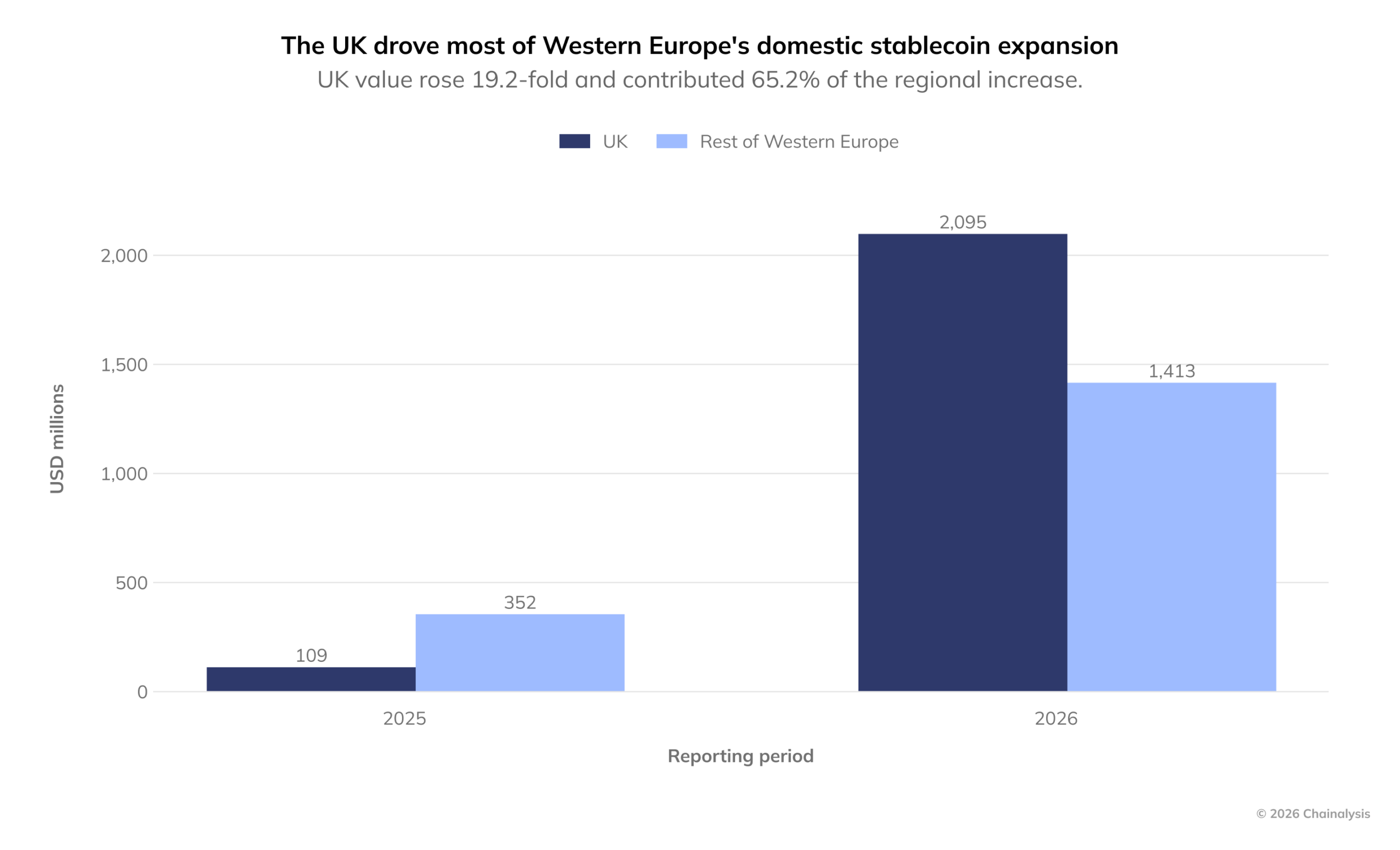
The report found $2.09 billion in stablecoin transfers between UK-based wallets during the study period, up from $109 million in the preceding year. The UK accounted for 65.2% of the increase in domestic stablecoin transfers across Western Europe and 60% of the region’s domestic transfer value. UK domestic transfer value was 1.32 times its cross-border peer-to-peer and service-provider transfer value; elsewhere in Western Europe, cross-border value was 4.38 times domestic value.
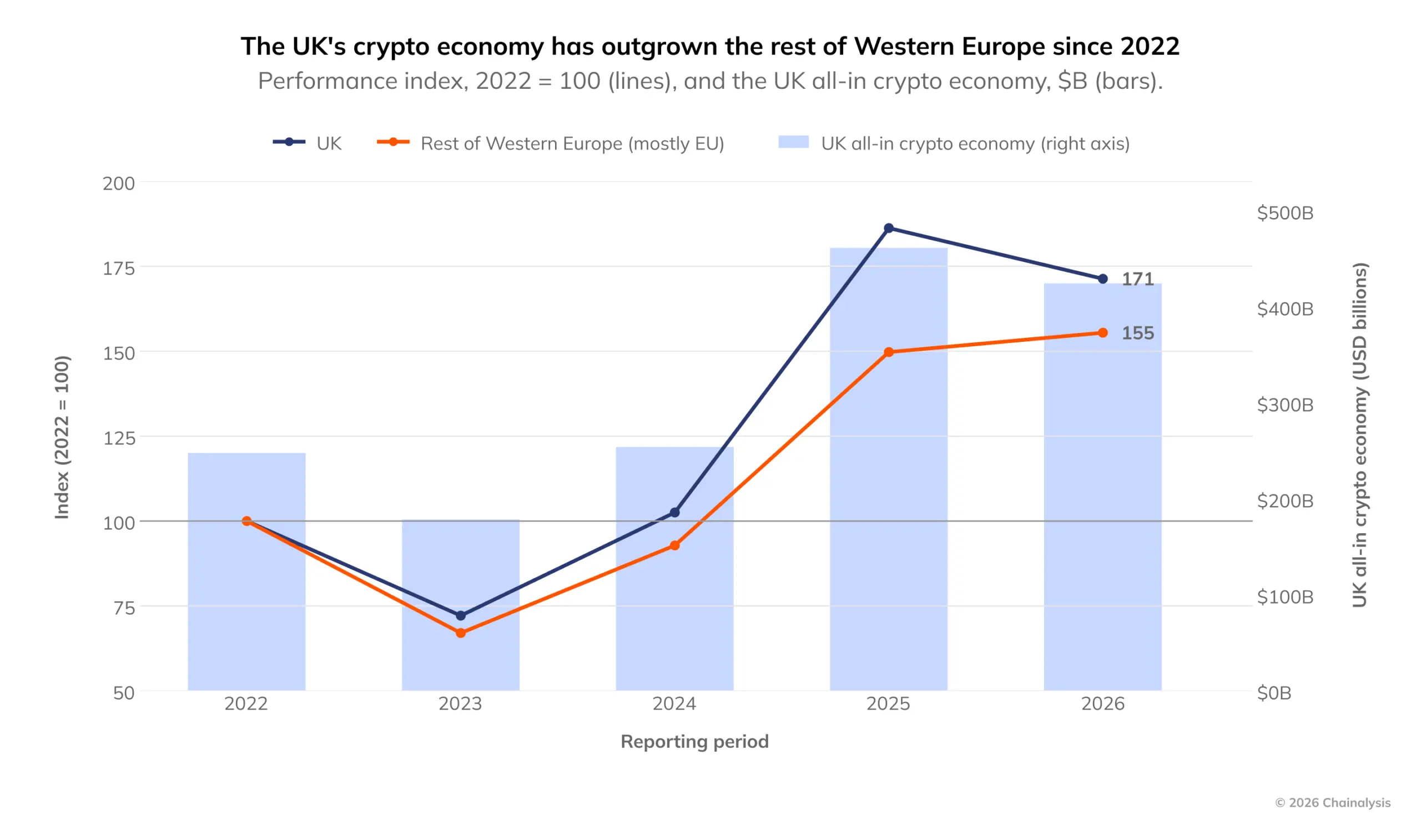
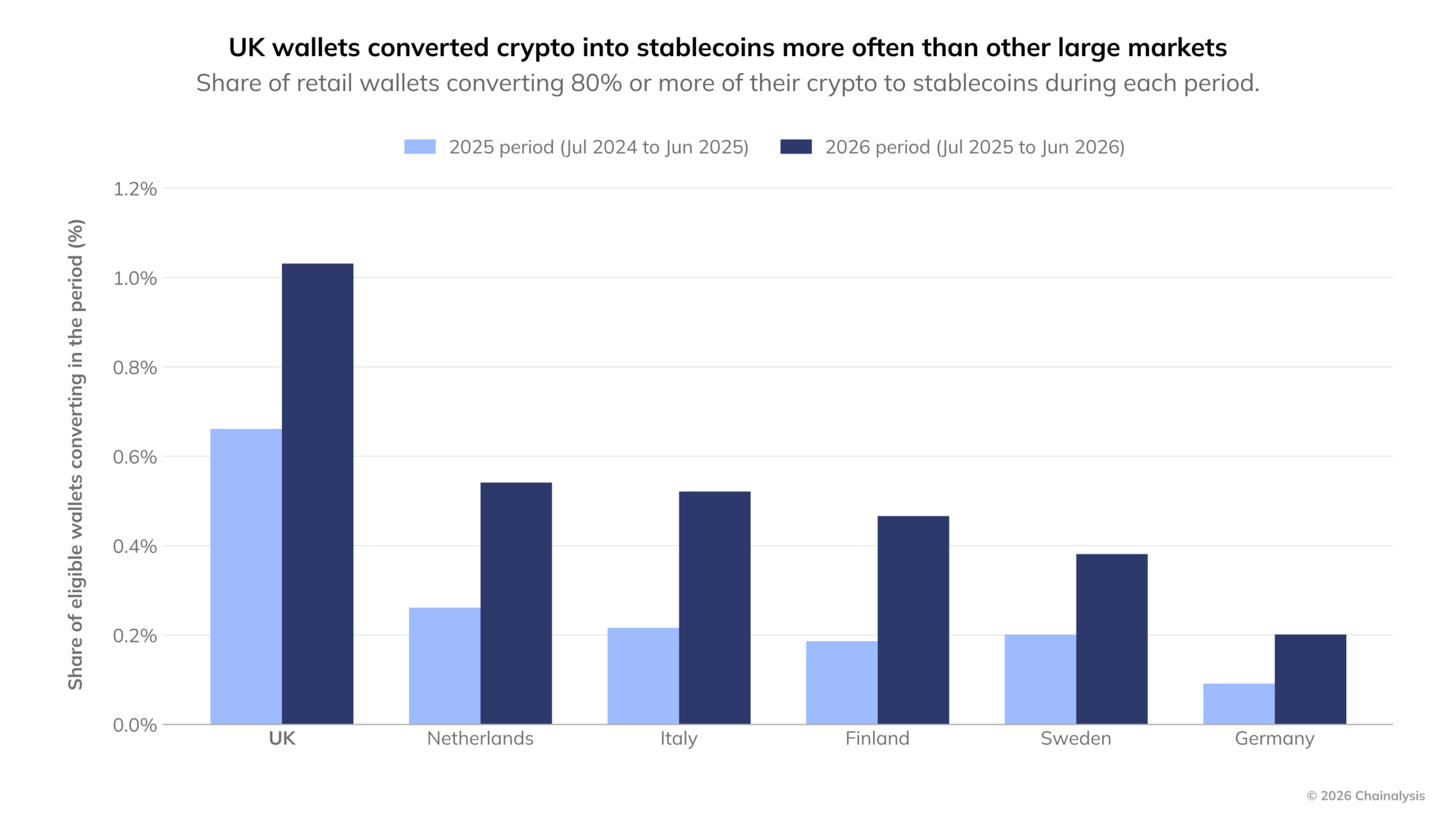
Chainalysis also found that 1.03% of qualifying UK retail wallets had converted at least 80% of their crypto assets into stablecoins, up from 0.66% a year earlier. That describes the observed wallets, not the UK population as a whole.
In June 2026, the Bank of England published a draft policy for systemic stablecoins. The report described a proposed £20,000 per-person holding limit for each systemic sterling stablecoin; it should not be read as an enacted limit.
France: more stablecoins moved to self-custody
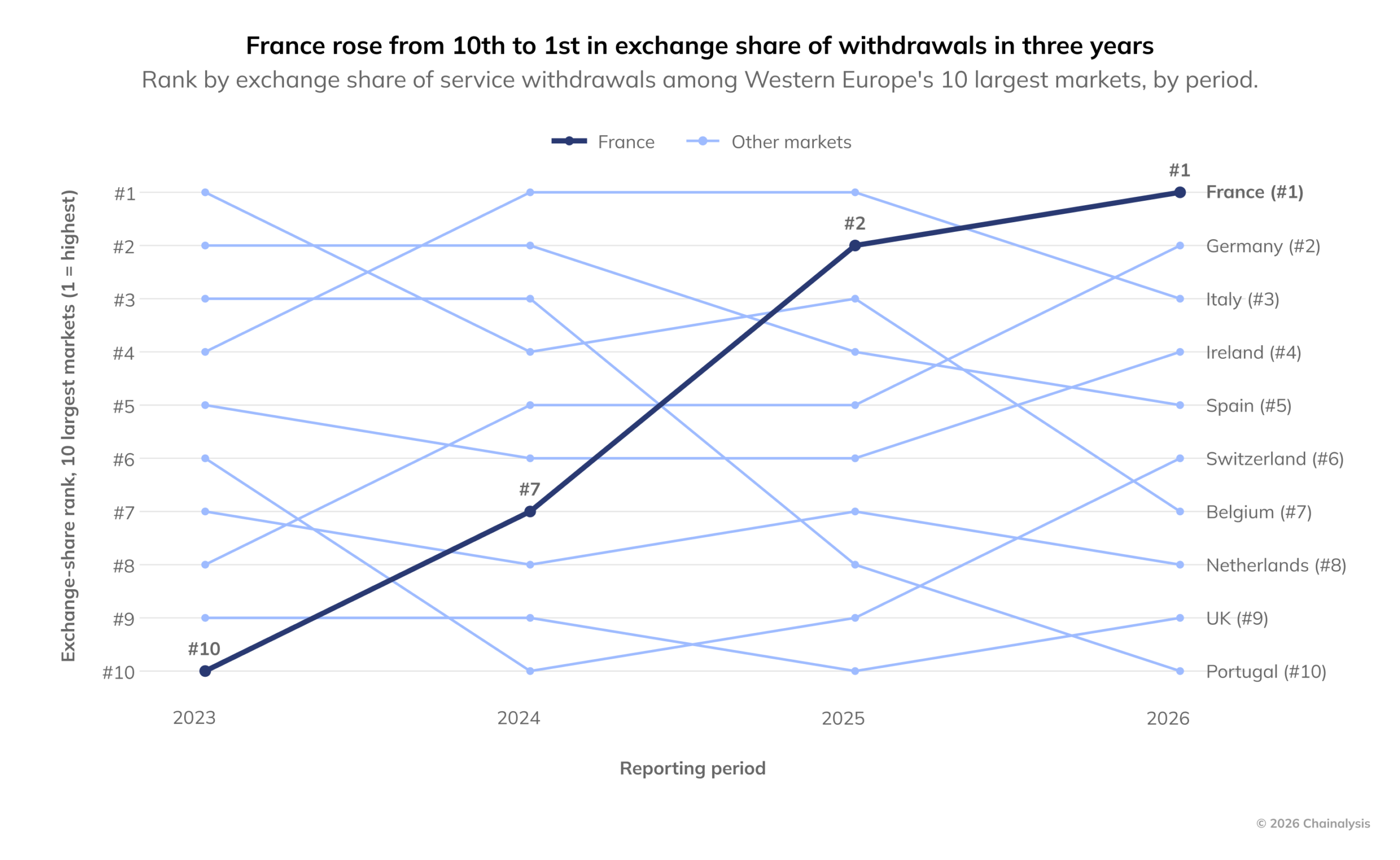
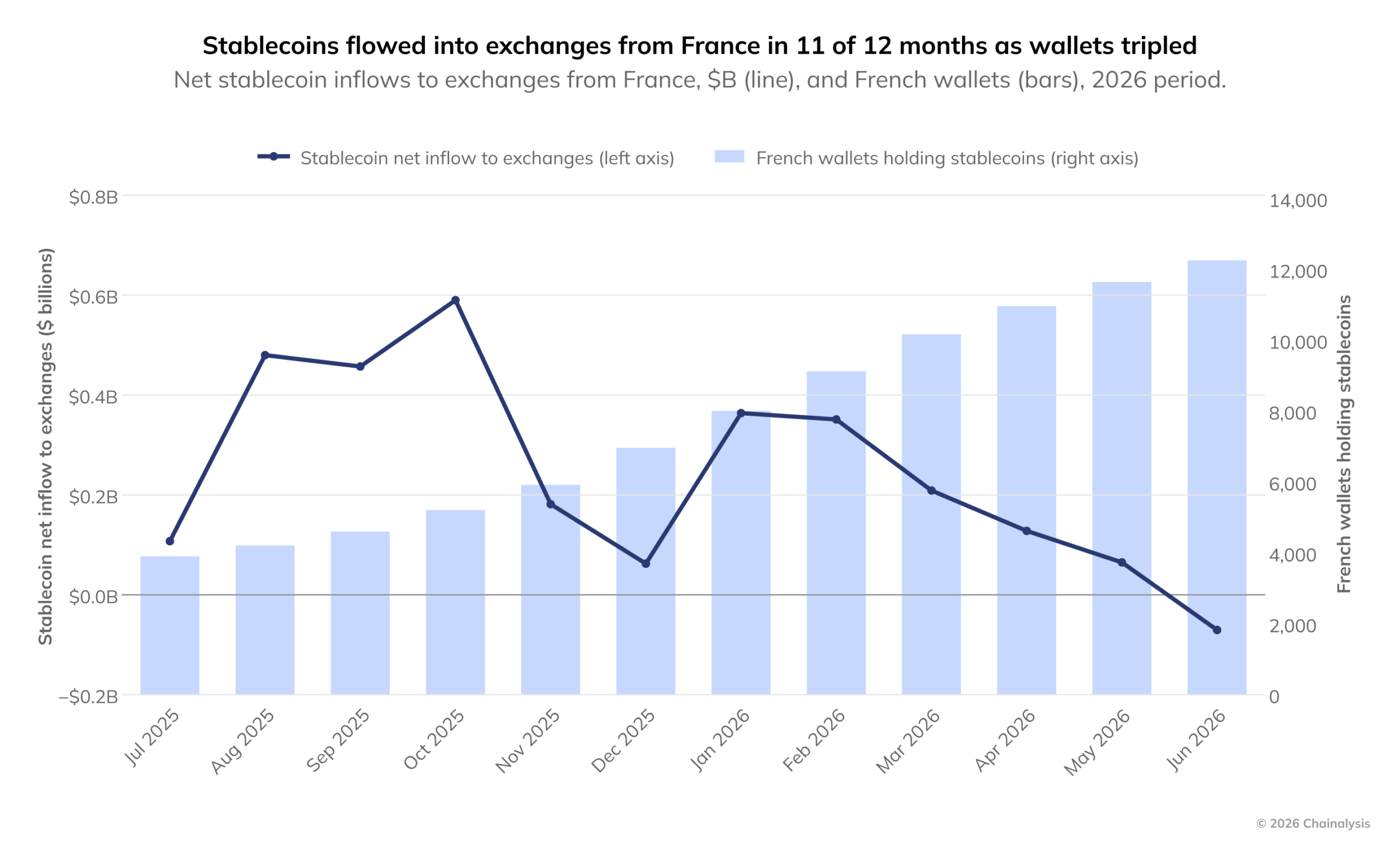
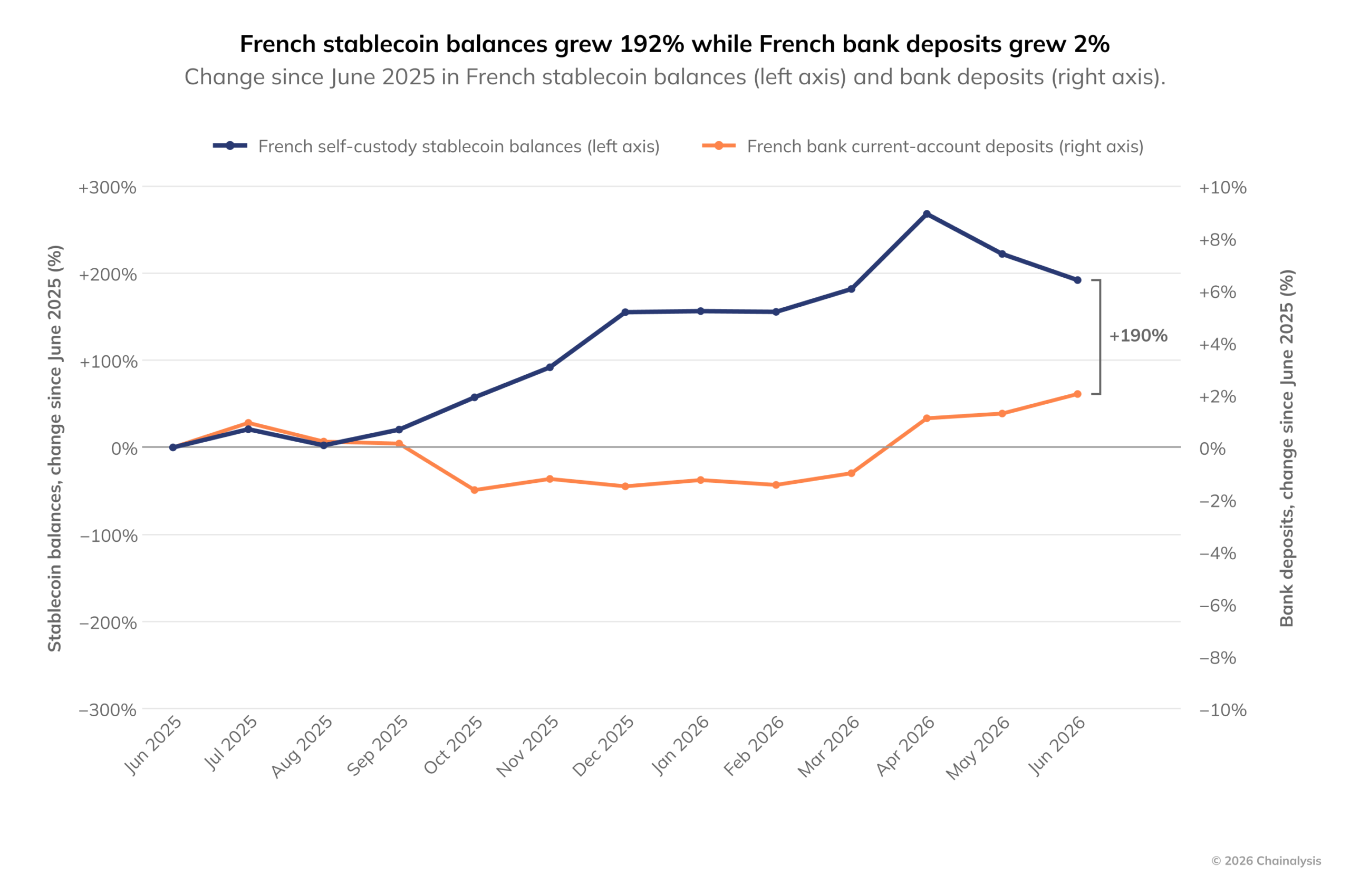
In France, stablecoins made up 54.2% of the value users withdrew from exchanges during the study period, according to Chainalysis. Its count of French individual wallets holding stablecoins rose from 3,577 in June 2025 to 12,255 in June 2026. Stablecoin balances in French self-custody wallets increased 192% over the study period. The report discussed these changes alongside French fiscal uncertainty, but the wallet data alone cannot establish why individual users moved funds.
Reserve rules remain under debate
The report said that, in September 2026, the European Central Bank and national central banks objected to a MiCA reserve rule requiring ordinary stablecoin issuers to hold at least 30% of reserves as deposits at European banks, rising to 60% for large, significant stablecoins. Their stated concern was that a wave of redemptions could rapidly drain bank deposits. The objection was to an existing rule, not an announcement that the percentages had changed.
The source provides no issuer-level reserve statements, attestations or audits. Its findings show where stablecoins were held and transferred, while leaving the backing and redemption risk of any particular token to be assessed separately.
Source: chaincatcher.com (originally published 2026-11-10 23:17 UTC+8)