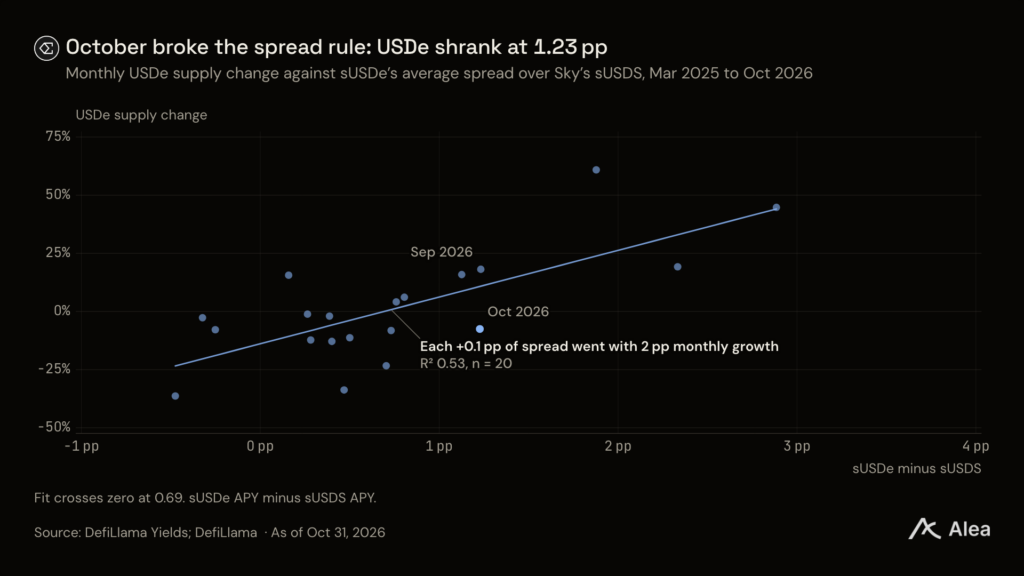
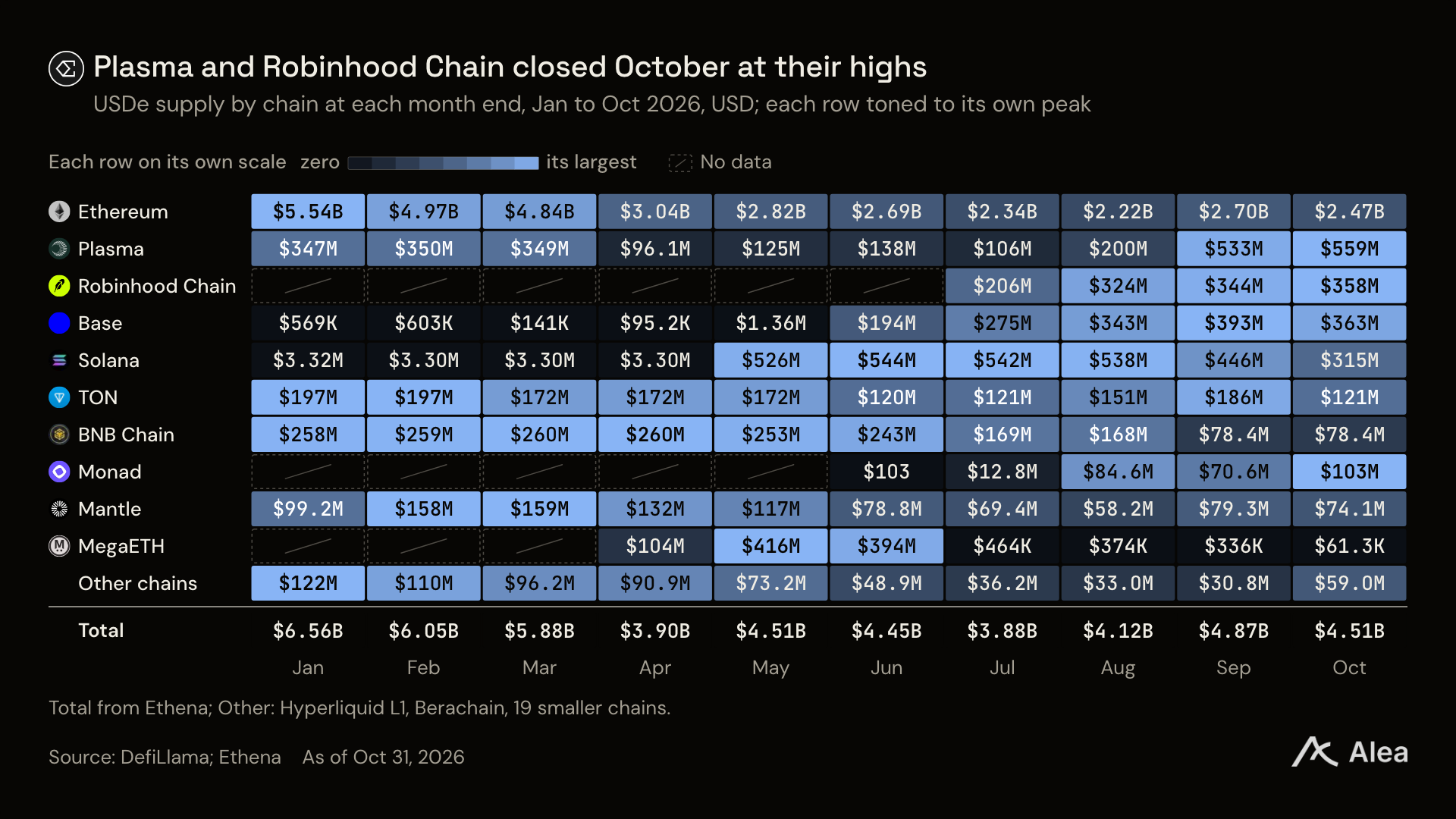
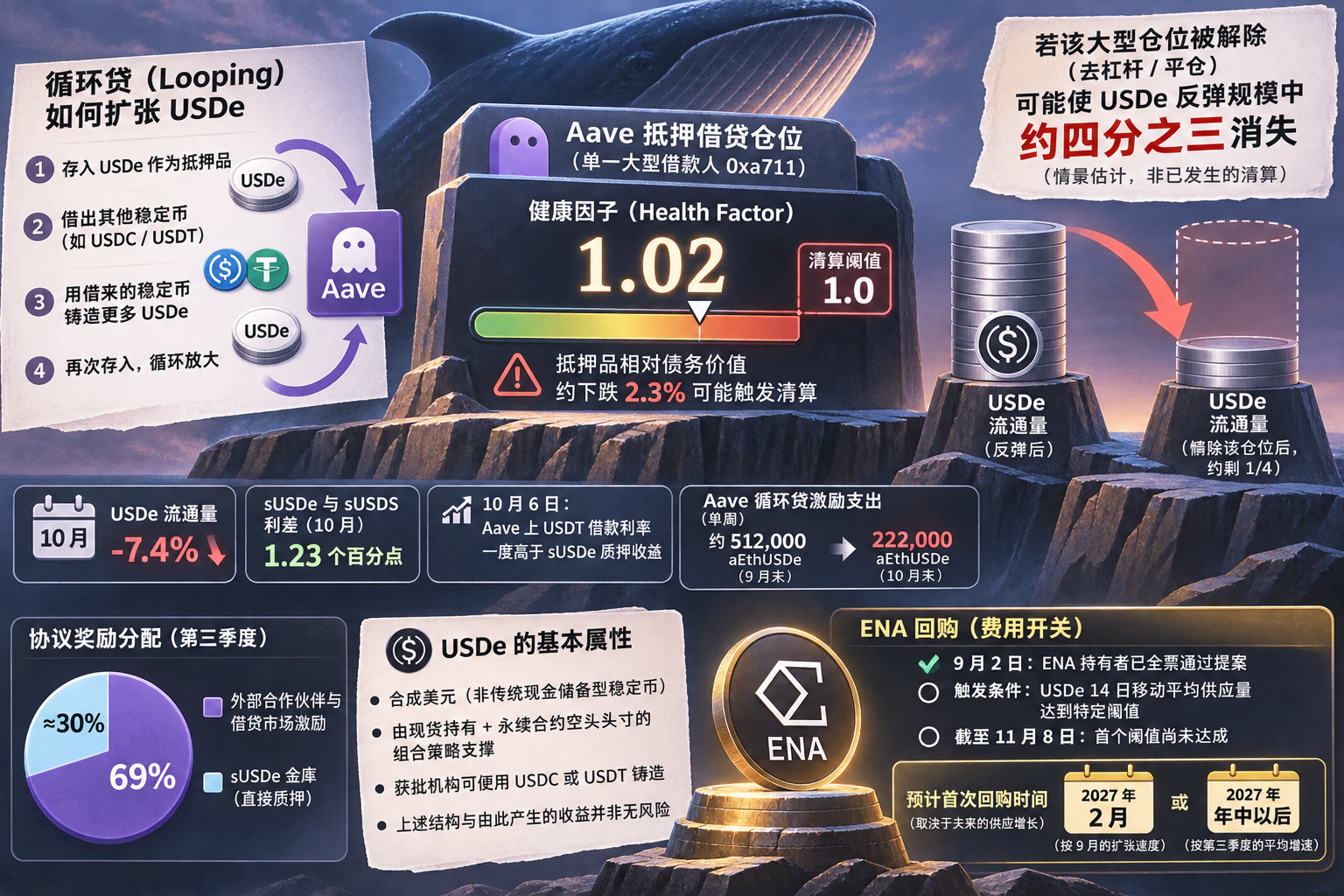
USDe can expand when borrowers deposit it as collateral, borrow other stablecoins, mint more USDe and repeat the cycle. Reversing those positions can shrink its supply. That mechanism is central to an Alea Research analysis published on November 20, 2026, which reported that USDe’s circulating supply fell 7.4% in October despite a yield advantage for staked USDe over a competing savings token.
Why the yield spread was not enough
During October, the spread between sUSDe and Sky’s sUSDS remained at 1.23 percentage points, according to the analysis. But borrowers running leveraged positions also had to pay variable interest. On October 6, when USDe supply reached a peak, the USDT borrowing rate on Aave rose above sUSDe’s staking yield. Borrowing rates later declined, but USDe outflows continued.
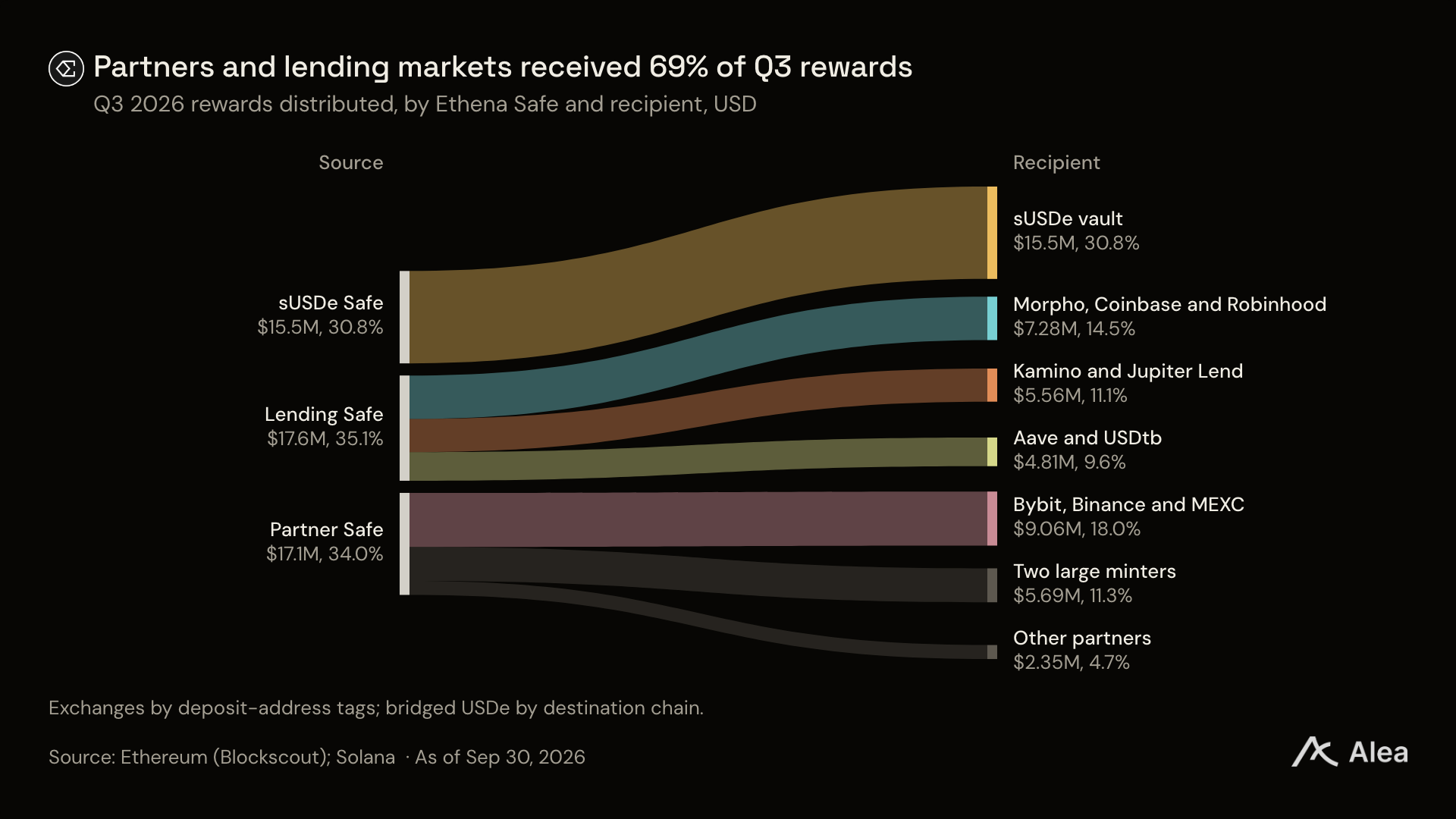
Ethena also reduced its weekly Aave looping-incentive expenditure from about 512,000 aEthUSDe at the end of September to 222,000 by the end of October, the report said. In the third quarter, external partners and lending-market incentive wallets received 69% of protocol rewards; roughly three-tenths went to the sUSDe vault used for direct staking.
USDe is a synthetic dollar rather than a conventional cash-backed stablecoin. The report describes Ethena’s backing strategy as combining spot holdings with short perpetual-futures positions. It also says approved institutions can mint USDe using USDC or USDT. Those descriptions do not make the backing or the resulting yield risk-free.
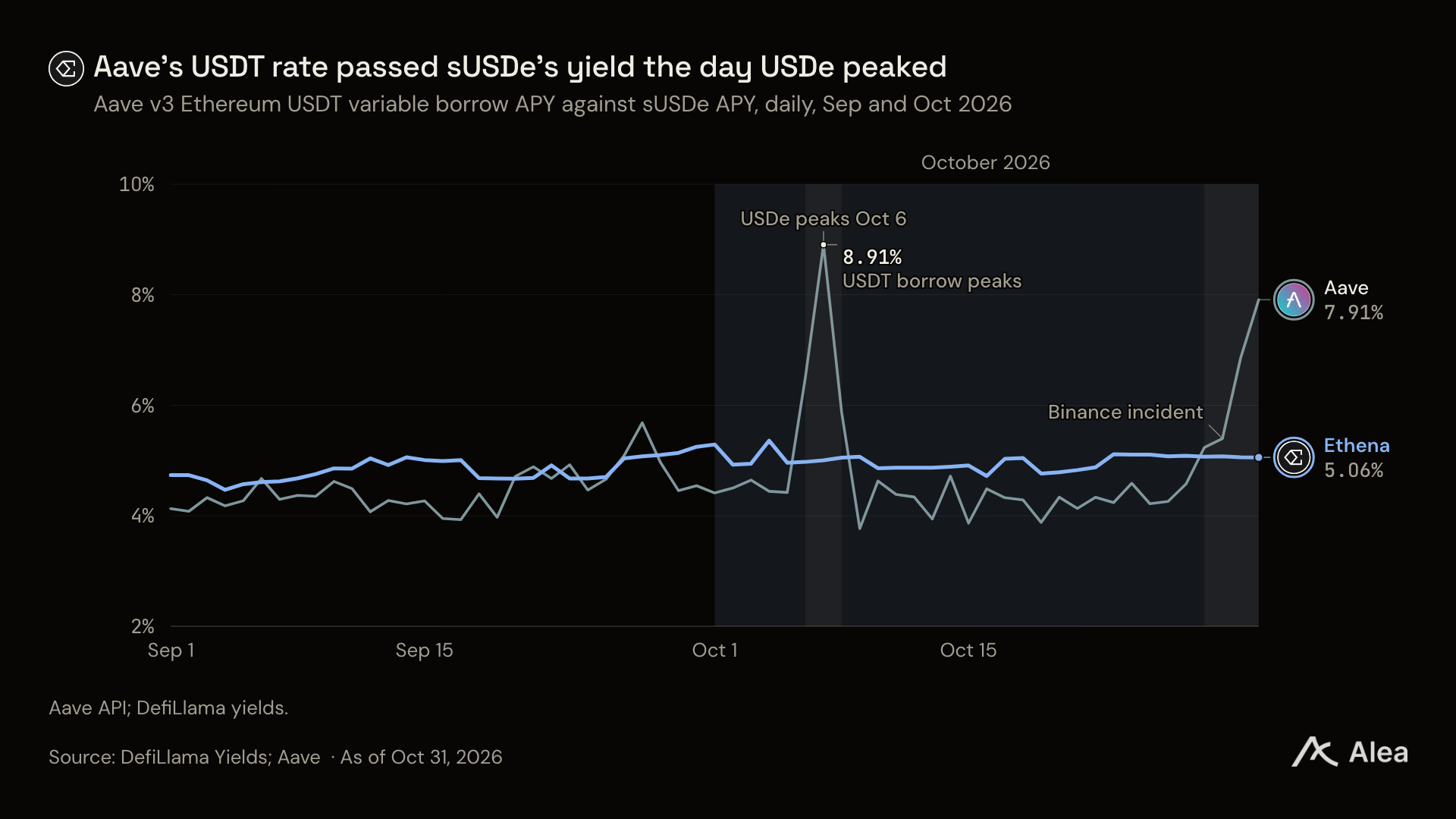
A rebound concentrated in one borrower
The analysis said USDe had recovered its post–October 6 supply decline by November 8. It traced much of the rebound to a single Aave borrower: on November 6, a multisignature Safe wallet ending in 0xa711 completed 21 borrowing-and-minting cycles in four hours.
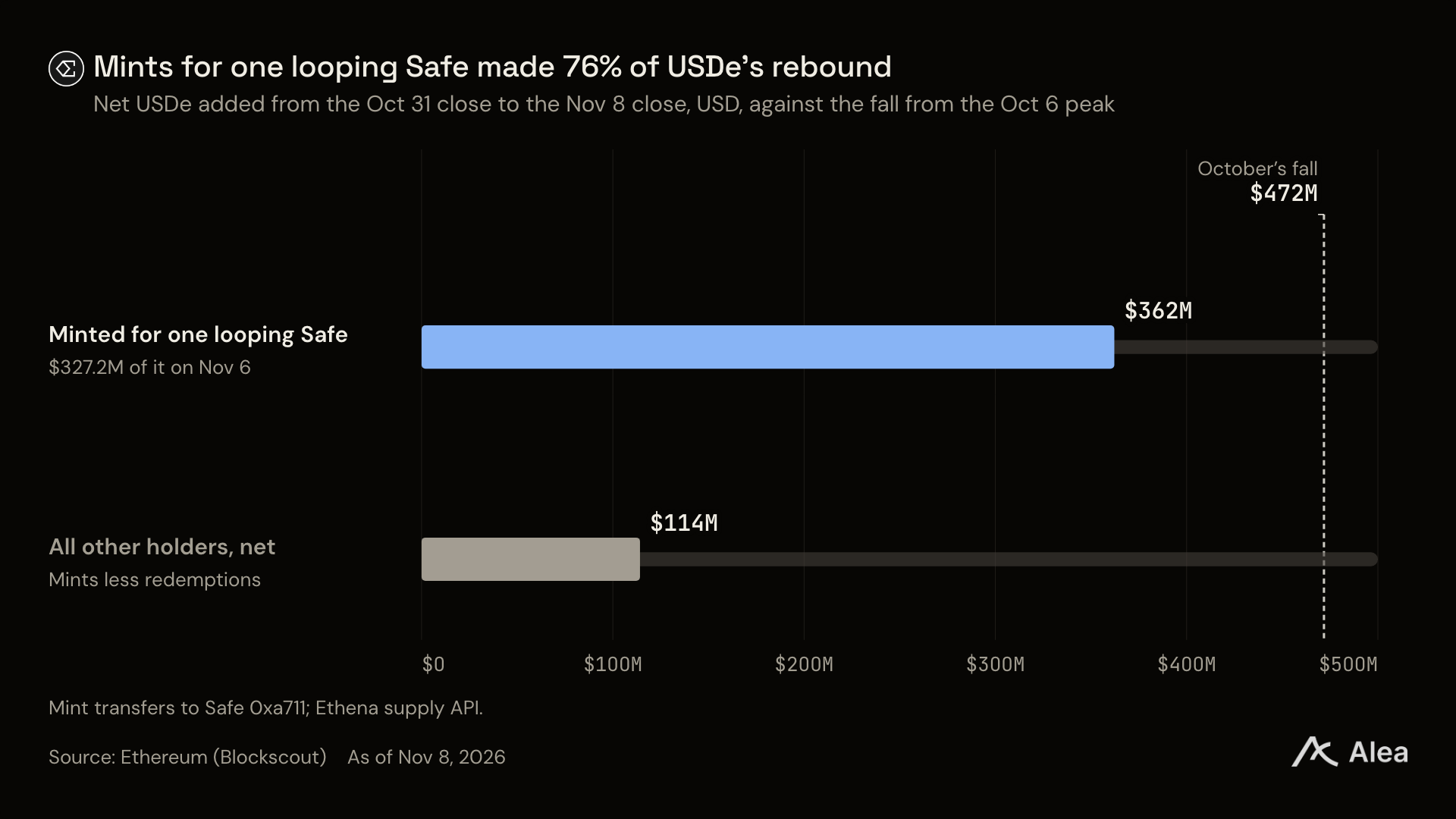
On November 12, that wallet’s Aave health factor was 1.02, close to the 1.0 liquidation threshold. Alea Research estimated that a roughly 2.3% deterioration in collateral value relative to debt could trigger liquidation. Its assessment that unwinding the position could erase about three-quarters of the rebound is a scenario, not a reported liquidation.
What this means for the proposed ENA buyback
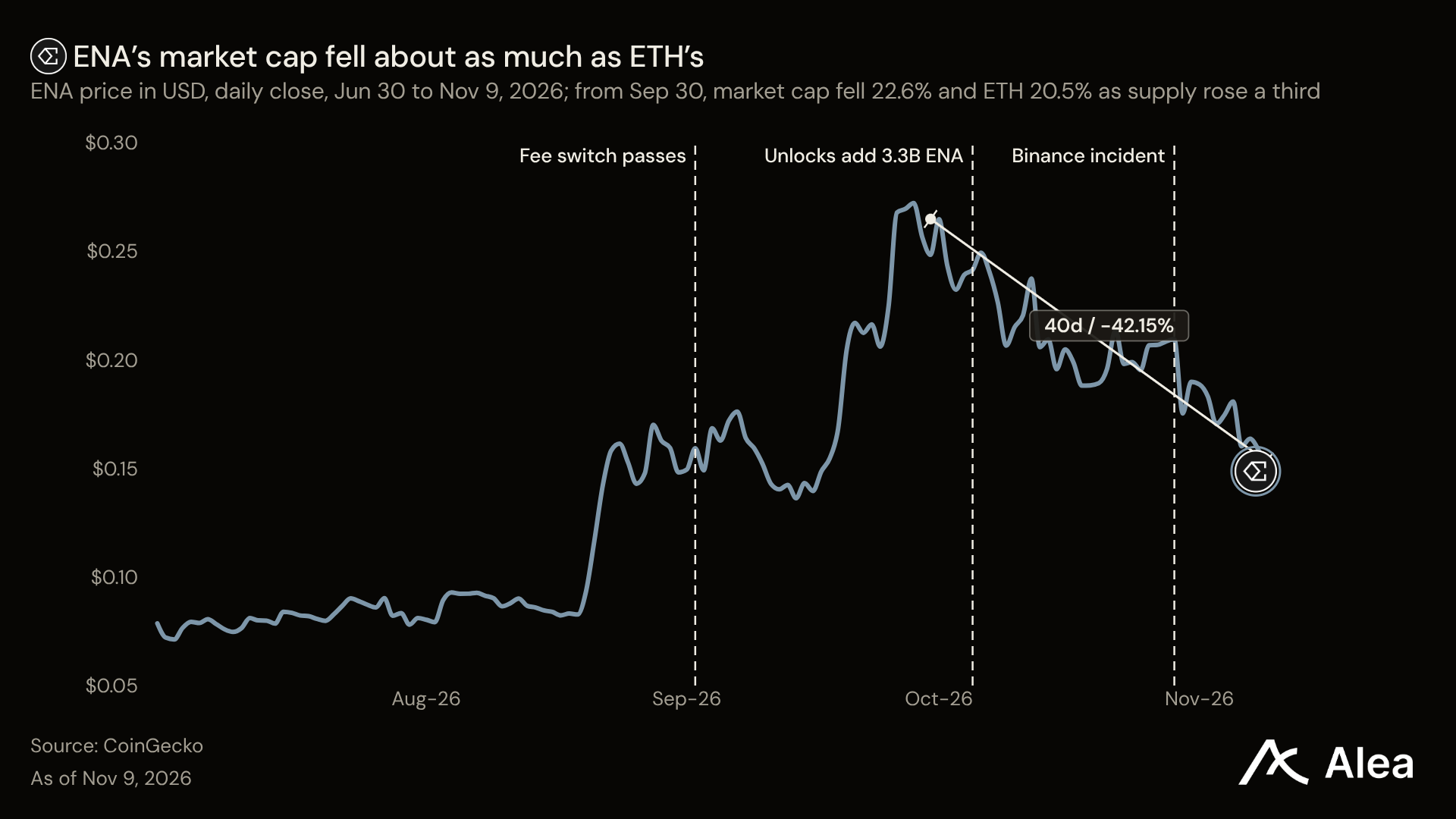
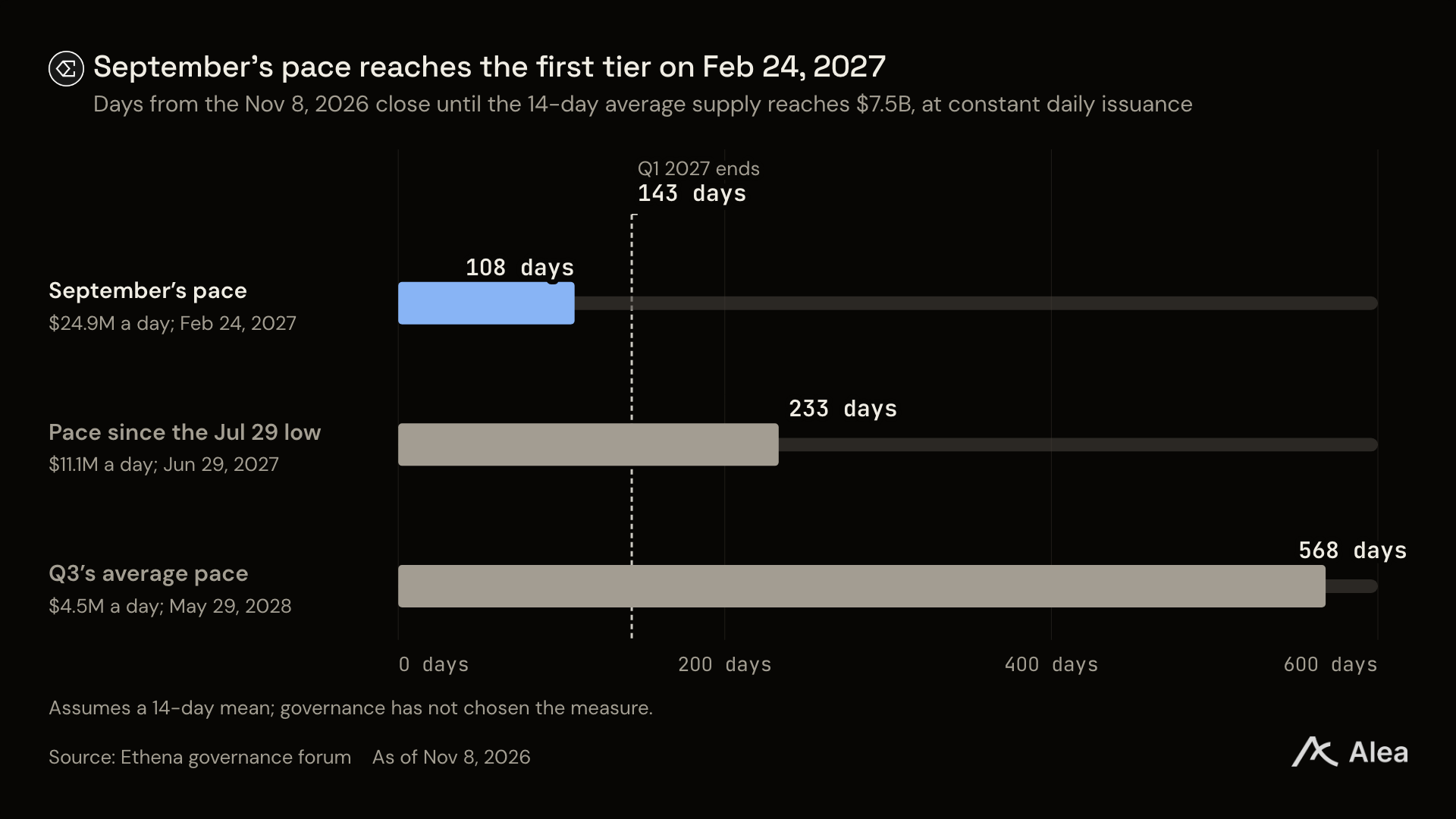
ENA holders unanimously approved a fee-switch proposal on September 2, according to the report. Under the proposal, reaching a specified 14-day moving-average USDe supply threshold would direct 20% of net reserve income toward open-market ENA buybacks. Approval did not mean buybacks had begun: Alea Research said the first threshold had not been met as of November 8.
Based on September’s faster expansion rate, the analysis estimated that the first threshold might be reached in February 2027. Using the third quarter’s average growth rate pushed its estimate beyond mid-2027. Both dates depend on future supply growth; the October decline and the concentration of the subsequent rebound show why that growth cannot be assumed.