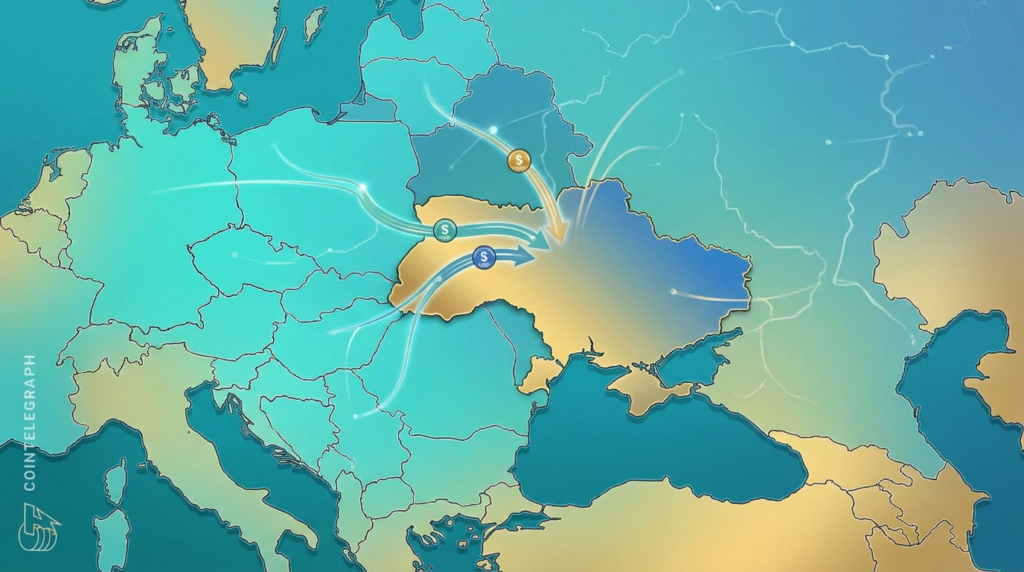
Chainalysis reported that Ukraine received $12 billion in cross-border stablecoin wallet-to-wallet transfers from July 2025 through June 2026. Of that amount, $2.41 billion came in transfers below $10,000. A Chainalysis spokesperson told Cointelegraph the flows were largely denominated in US dollar-pegged stablecoins, but the firm did not provide a breakdown by token.
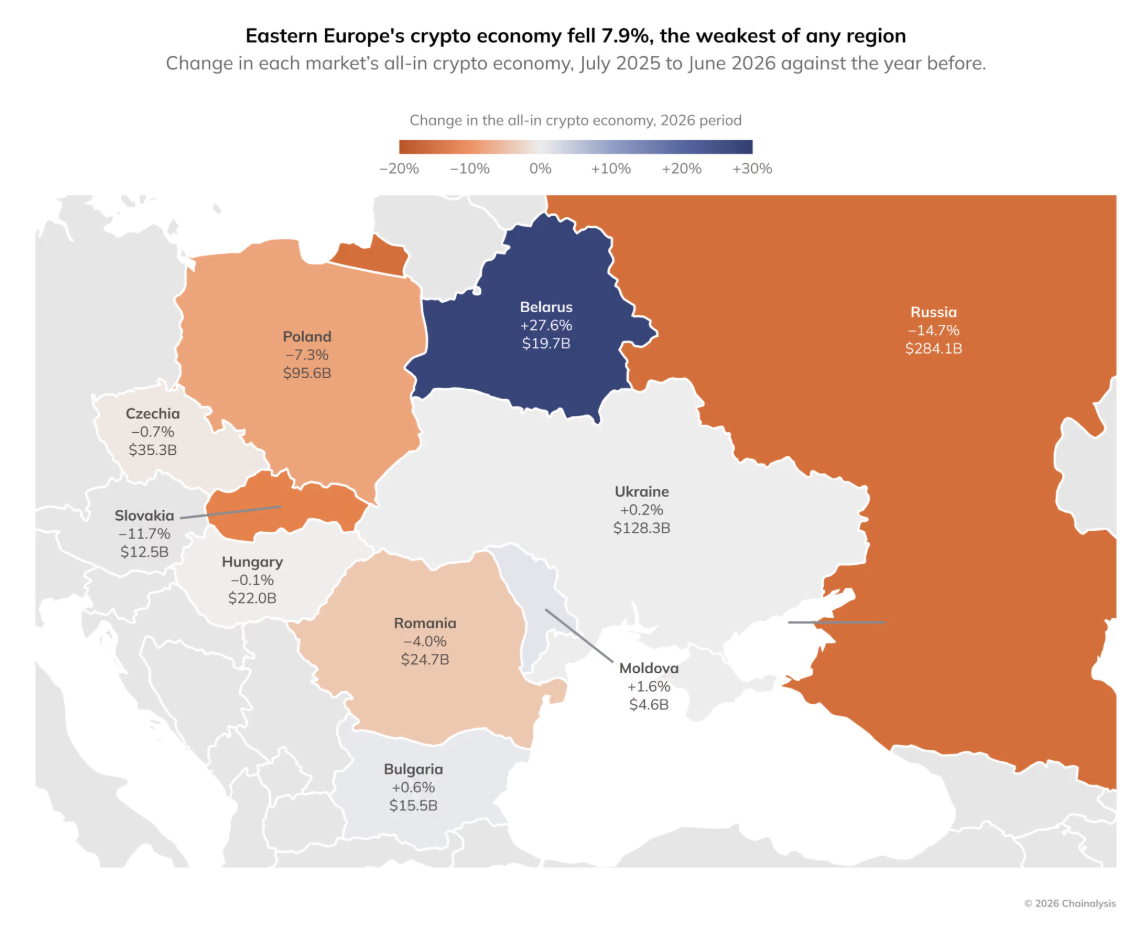
The figures appeared in reporting dated November 18, 2026 (UTC+8), on a Chainalysis report published the previous day. They contrast with the region’s overall decline: Eastern Europe’s measured crypto activity fell 7.9% to $642.1 billion, from $697.1 billion a year earlier. Chainalysis reported a 1.6% decline globally. Russia accounted for roughly 44% of the regional total; its activity fell 14.7% to $284.1 billion. Belarus recorded 27.6% growth, while Bulgaria, Moldova and Ukraine posted smaller increases.
Smaller transfers and stablecoin use
Across Eastern Europe, the value of transfers of at least $10,000 to crypto services fell 17.4%, from $591.5 billion to $488.6 billion. The value of smaller transfers to those services rose 8.3%. These retail-sized transfers made up 13.1% of the value sent to crypto services in the region—the highest share among the regions Chainalysis studied, compared with a 10.1% global average.
Crypto ATM transaction volume across Eastern Europe rose from $17.3 million to $33.9 million. Poland recorded a 120% increase in ATM transactions despite a 5% decline in centralized exchange activity. Stablecoins accounted for roughly 90% of its ATM transactions.
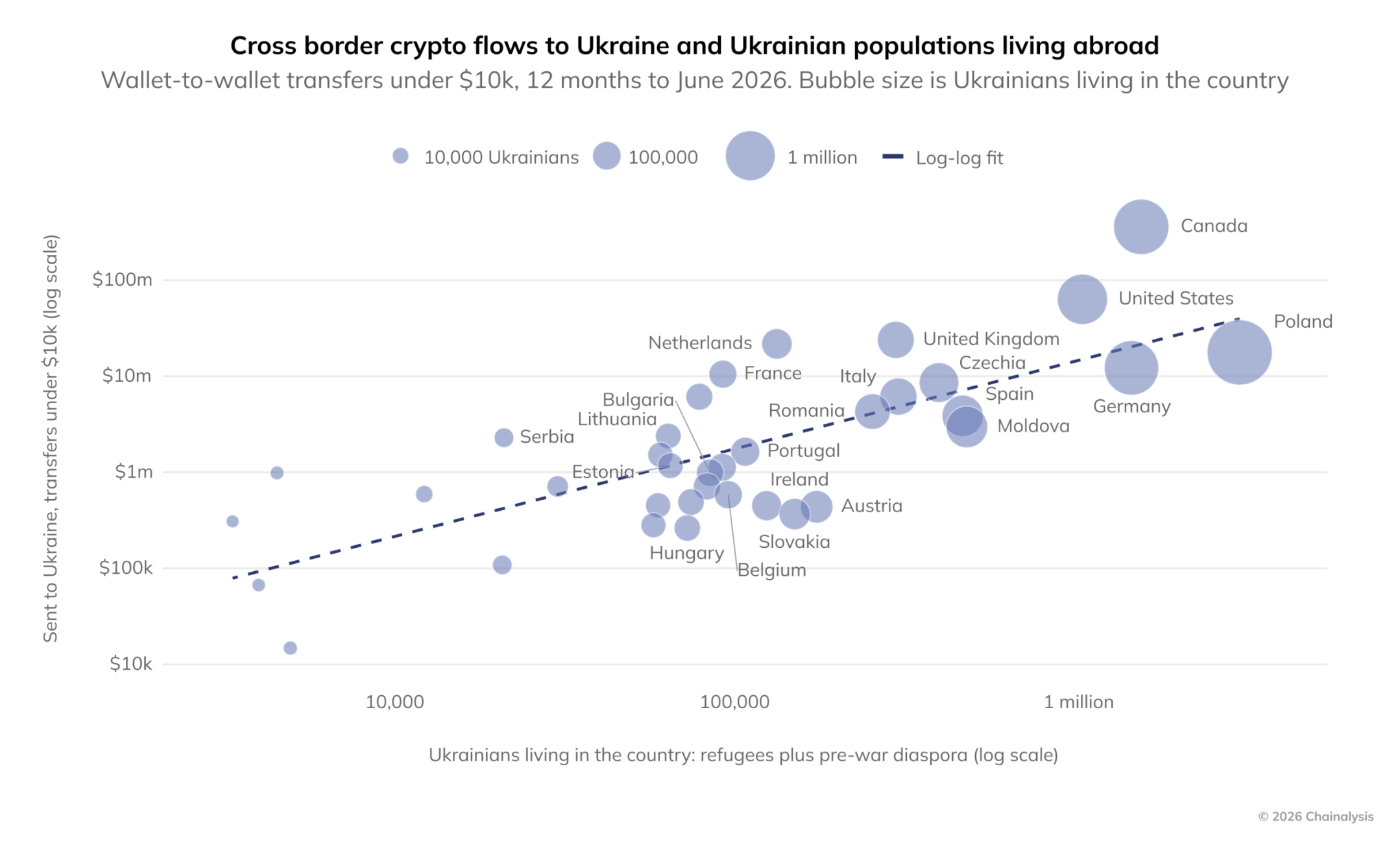
Chainalysis also found that countries with larger Ukrainian populations—including prewar diaspora communities and people who arrived after Russia’s full-scale invasion in February 2022—generally sent more stablecoins to Ukraine. Among 36 countries studied across Europe and North America, Canada was the largest source of retail-sized, remittance-like transfers, at $359 million.
Chainalysis measures crypto activity using inflows to crypto services, domestic transfers between personal wallets and cross-border inflows to personal wallets. Because its totals are expressed in dollars, changes in cryptocurrency prices can affect the reported values.