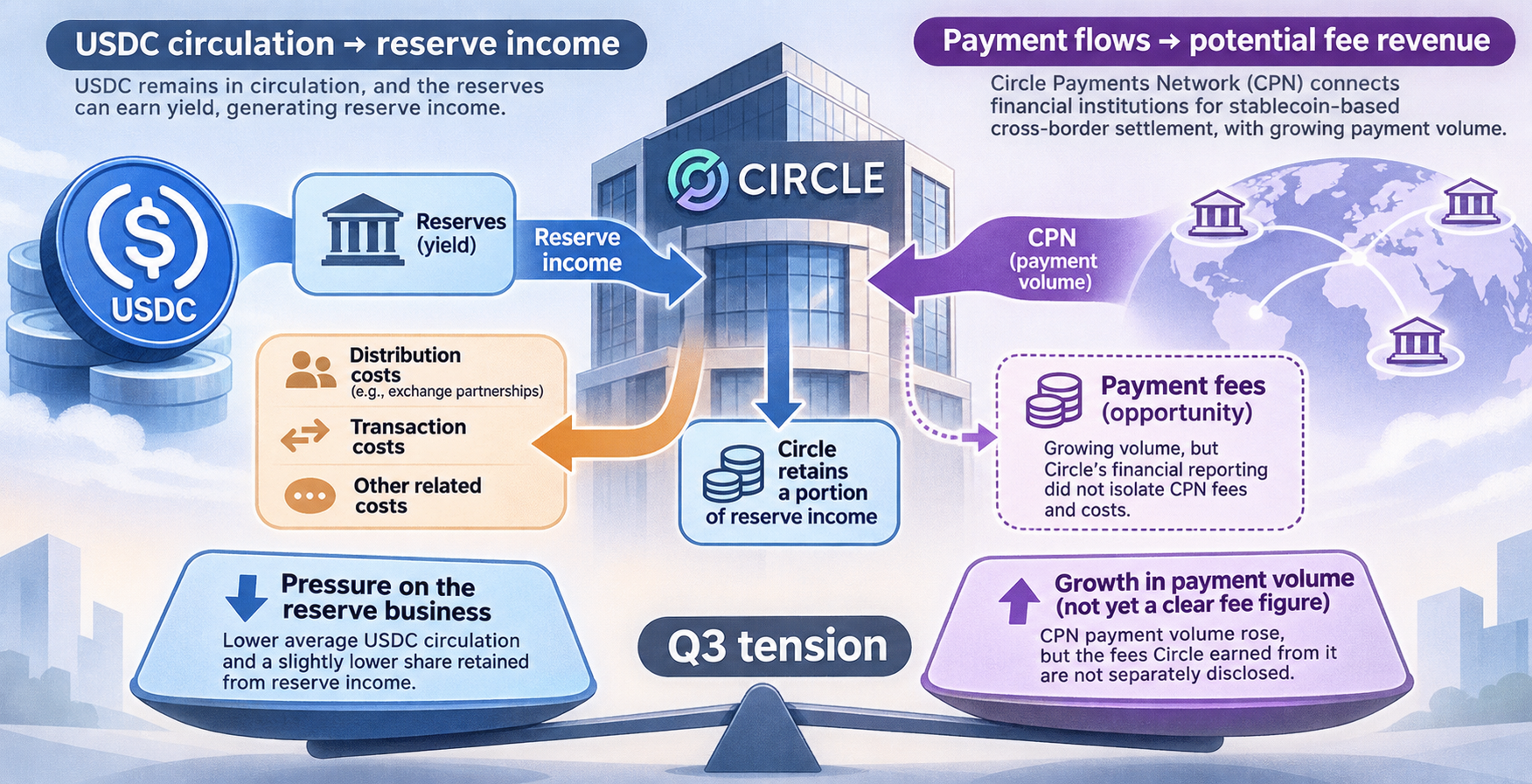
Circle earns reserve income while USDC remains in circulation. It is also trying to earn fees when stablecoins move through its payment network. An analysis published on November 17, 2026, by Web3小律 (Will 阿望) found a tension between those businesses in Circle’s third-quarter results: reported earnings rose sharply, but average USDC circulation and reserve income fell.
What lifted the quarter
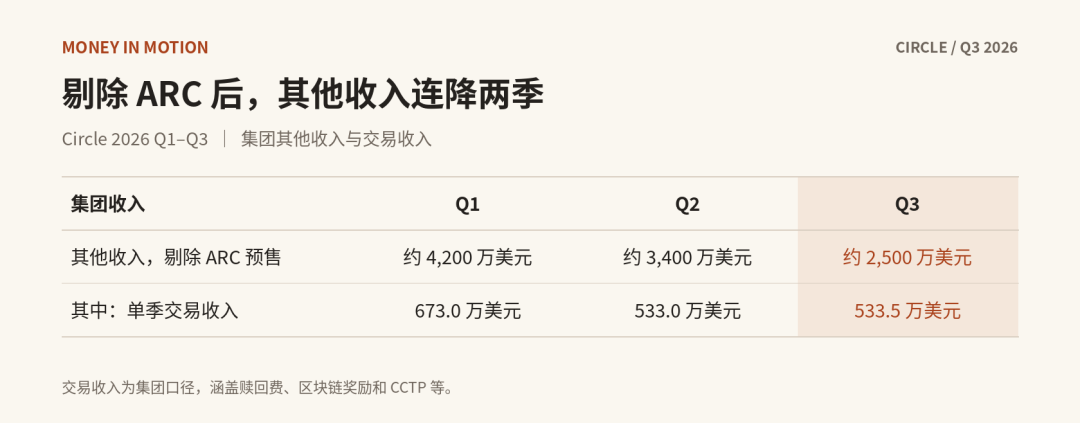
Circle reported $865 million in total revenue and reserve income for Q3 2026, up about 23% from Q2. That included $658 million in reserve income, down from $668 million, and $207 million in other revenue, up from $34 million. About $182 million of Q3 other revenue came from Arc token presales. Circle recognized roughly three-quarters of the presale proceeds after the public mainnet launch and token minting and delivery, according to the analysis.
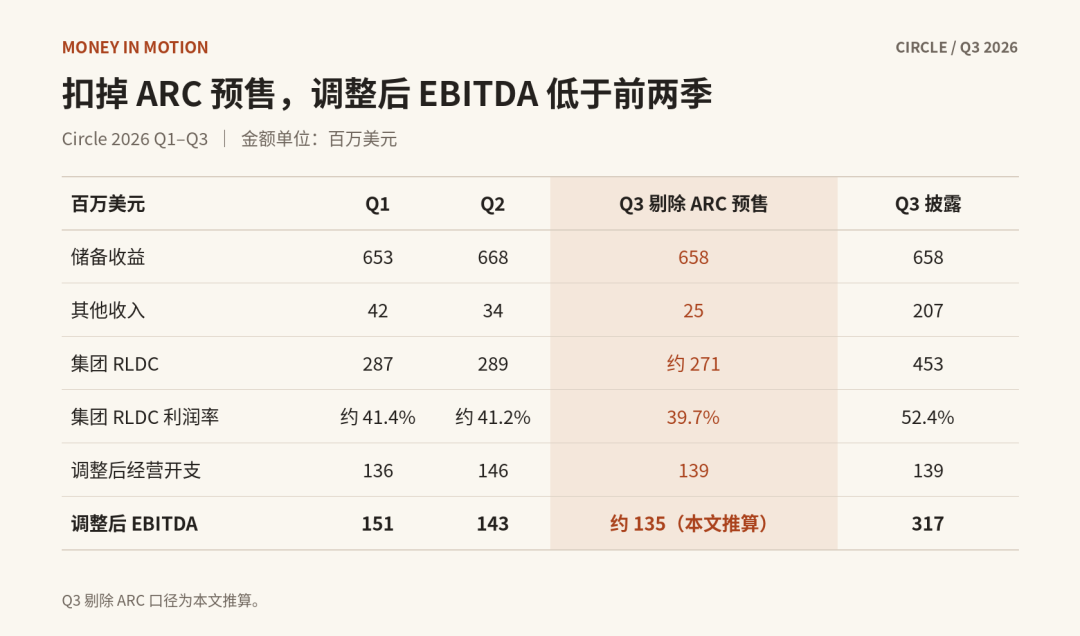
Reported adjusted EBITDA rose from $143 million in Q2 to $317 million in Q3. Simply subtracting the $182 million Arc presale figure gives about $135 million—below Q2’s $143 million and Q1’s $151 million. That subtraction is the author’s rough comparison, not a separately reported adjusted EBITDA measure. Excluding the same presale figure from total revenue and reserve income leaves about $683 million.
Less USDC on average, and less retained from reserves
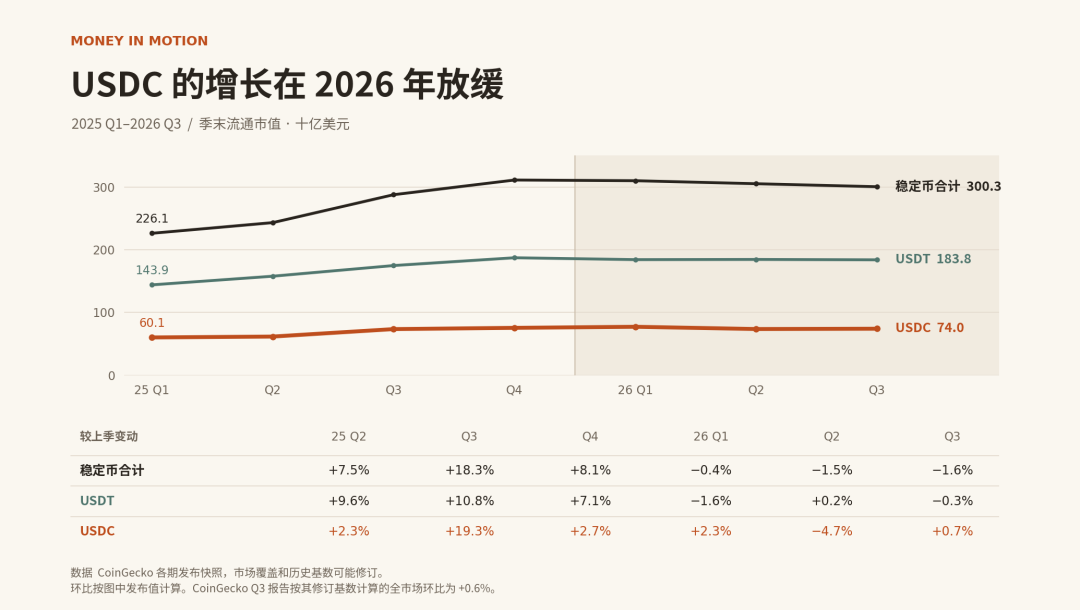
The average amount of USDC in circulation during Q3 was $73.3 billion, down 4% from the preceding quarter. A slightly higher reserve yield of 3.54% did not offset that decline. The quarterly average matters for reserve earnings; a quarter-end circulation figure does not measure the balance held throughout the quarter.
The analysis calculated that Circle retained $37.80 of every $100 in reserve income after associated distribution and transaction costs, versus $38.60 in Q2. Circle’s CFO primarily attributed the decline to the Hyperliquid partnership operating for a full quarter, with the associated USDC balances held at Coinbase. The renewed Binance revenue-sharing terms were not expected to operate for a full quarter until Q4. Circle and Coinbase renewed their agreement on its existing terms, according to the article.
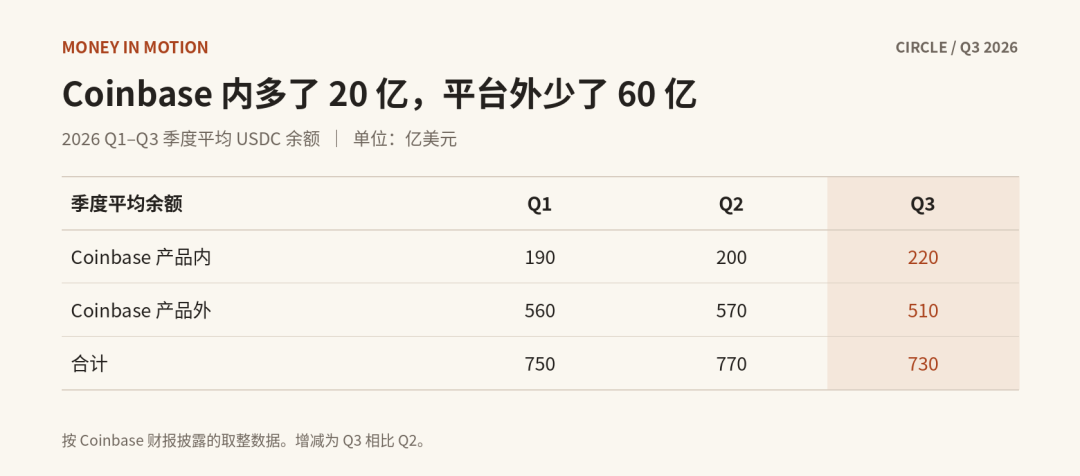
Using Coinbase’s rounded disclosures, the author said the network-wide average USDC balance fell by $4 billion in Q3: balances within Coinbase products rose by $2 billion, while those outside the platform fell by $6 billion. That breakdown does not yet show the off-platform growth Circle CEO Jeremy Allaire hoped channel incentives would produce.
Payment volume is not yet a clear fee figure
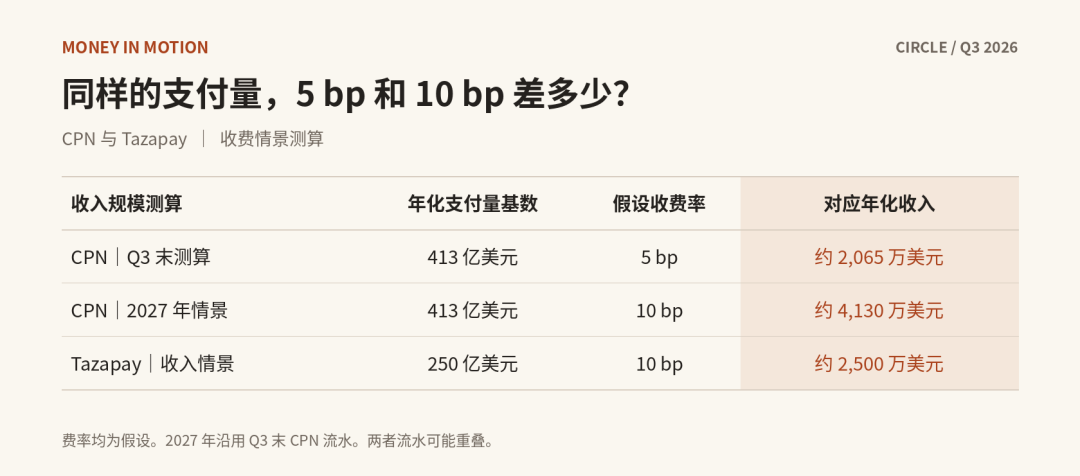
Circle Payments Network (CPN), which connects financial institutions for stablecoin-based cross-border settlement, reported quarter-end annualized payment volume of $41.3 billion in Q3, up from $14.7 billion in Q2 and $8.3 billion in Q1. The Q3 rate extrapolated roughly $3.4 billion of volume in the final 30 days of the quarter; it was not revenue Circle had earned.
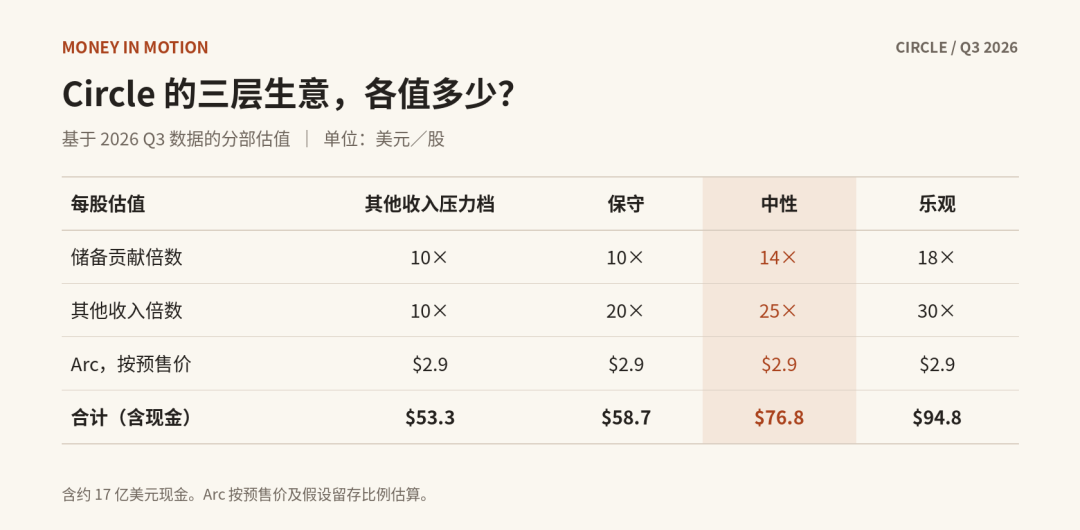
At an assumed fee of 5 basis points, sustaining that Q3-end pace for a year would imply about $20.65 million in annual revenue. Circle’s financial reporting, however, did not isolate CPN fees from other transaction revenue, which also includes redemption fees, blockchain rewards and digital-asset transaction infrastructure revenue, including CCTP. The analysis therefore could not establish how much CPN volume was charged or how much Circle collected.
Circle also proposed buying the Tazapay shares it did not already own for approximately $400 million in stock, subject to closing adjustments. Tazapay, already a CPN design partner, had more than $25 billion in annualized payment volume, about 60% of it involving stablecoins. The author argued that its customer relationships and local payout network could extend Circle’s payment capabilities, but that is a potential benefit, not realized Circle revenue. The transaction was expected to close in 2027.
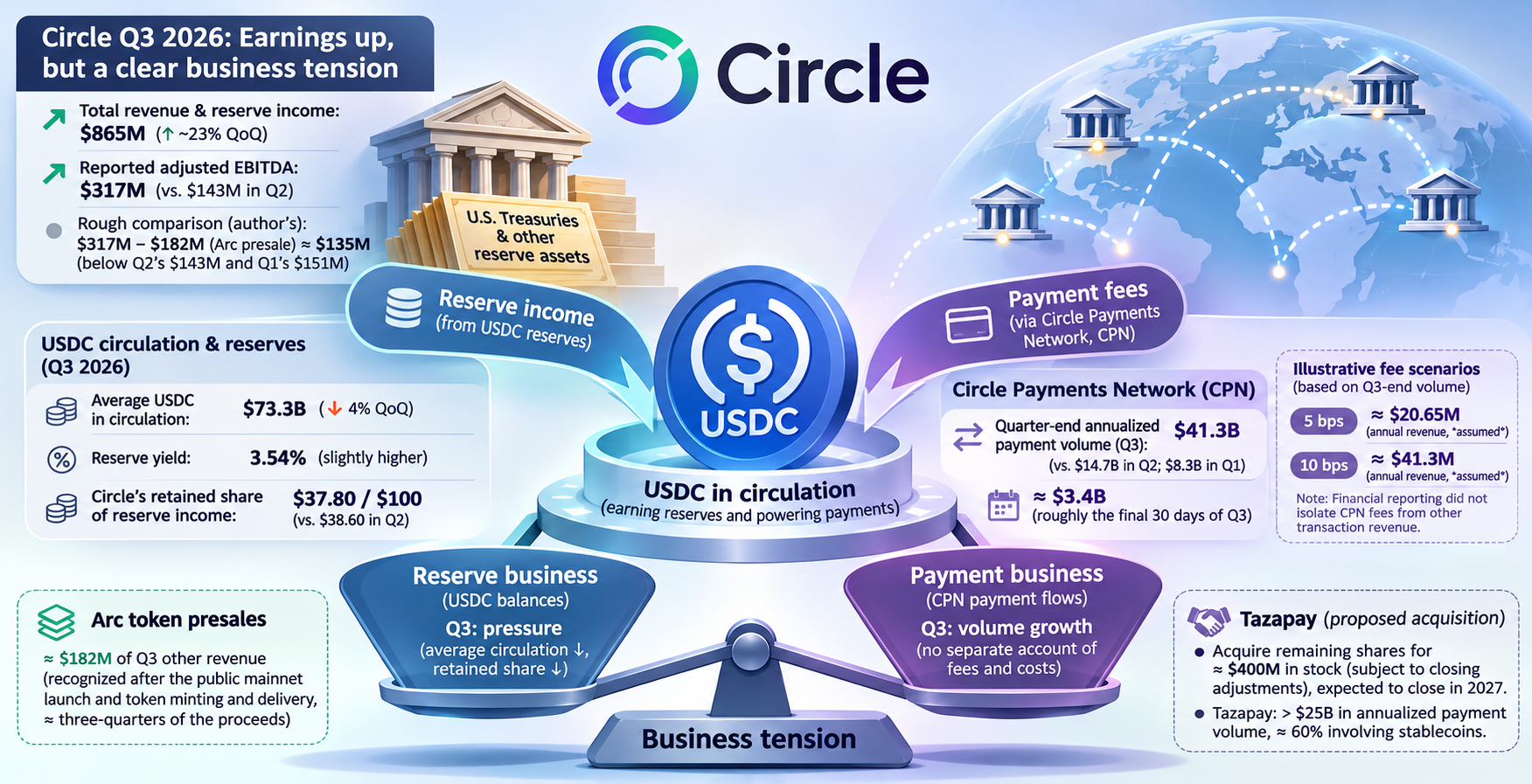
At an assumed 10-basis-point fee on CPN’s Q3-end annualized volume, the author estimated about $41.3 million in annual revenue. That scenario and the 5-basis-point scenario use the same payment volume and cannot be added together. Actual revenue would depend on which transactions incur fees, who charges them and how fees are shared.
The distinction running through the November 2026 analysis is between USDC balances that generate reserve income and payment flows that might generate recurring fees. Q3 showed pressure on the former and growth in the latter’s reported volume. It did not yet provide a separate account of CPN’s fees and costs sufficient to show what that volume earned Circle.