KuCoin announced on November 26, 2026, that it would close all four of its Monero (XMR) spot markets, including the XMR/USDT pair that recorded about $62.6 million in volume in the preceding 24 hours. CoinGecko’s snapshot that day ranked KuCoin as the most active exchange for Monero. After the announcement, XMR fell from $525.36 to $446.54 in less than five hours, a drop of about 15%, according to BitInfoCharts.
Trading and withdrawal deadlines
KuCoin has suspended XMR deposits and does not plan to reopen them. Spot trading against USDT, USDC, ETH and BTC will end at 08:00 UTC on November 30. The exchange cited its platform policies but did not identify a specific regulatory requirement for the delisting.
Withdrawals to private wallets are scheduled to remain open until 08:00 UTC on December 31, though KuCoin said it could close them earlier if network problems arise. The exchange said it might convert remaining XMR balances into stablecoins, but cautioned that “such conversion is not guaranteed.”
KuCoin also set November 27 as the end date for XMR flexible savings and November 30 for its XMR conversion and automated trading services. It will stop accepting XMR as collateral for VIP loans. Customers who borrowed against XMR may need to provide other collateral to avoid liquidation.
What the exit means for Monero liquidity
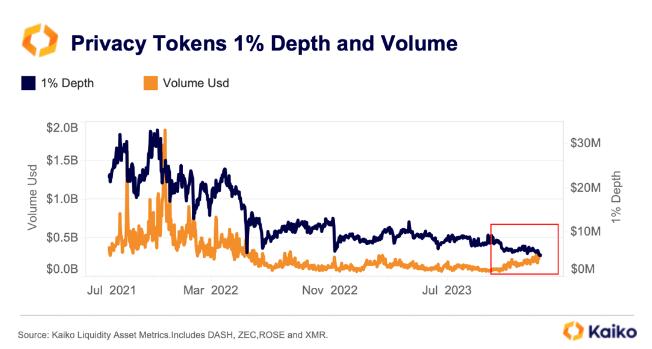
MEXC ended XMR spot trading on November 17, nine days before KuCoin’s announcement. Binance delisted Monero in February 2024. Kraken’s October 2024 halt applied to customers in the European Economic Area; unlike KuCoin, Kraken explicitly cited regulatory changes. Kaiko’s historical research found that liquidity across privacy cryptocurrencies had already weakened by early 2024 following exchange restrictions.
Monero does not rely on KuCoin to process payments, and earlier delistings did not prevent XMR from trading above $700 in 2026. The open question is how much of KuCoin’s trading activity will move to other exchanges and whether their order books can absorb it. The $62.6 million figure measures completed trades over one day, not the orders available at a given price. If the remaining markets lack depth, a large order could move the execution price further against the trader, particularly during periods of stress.