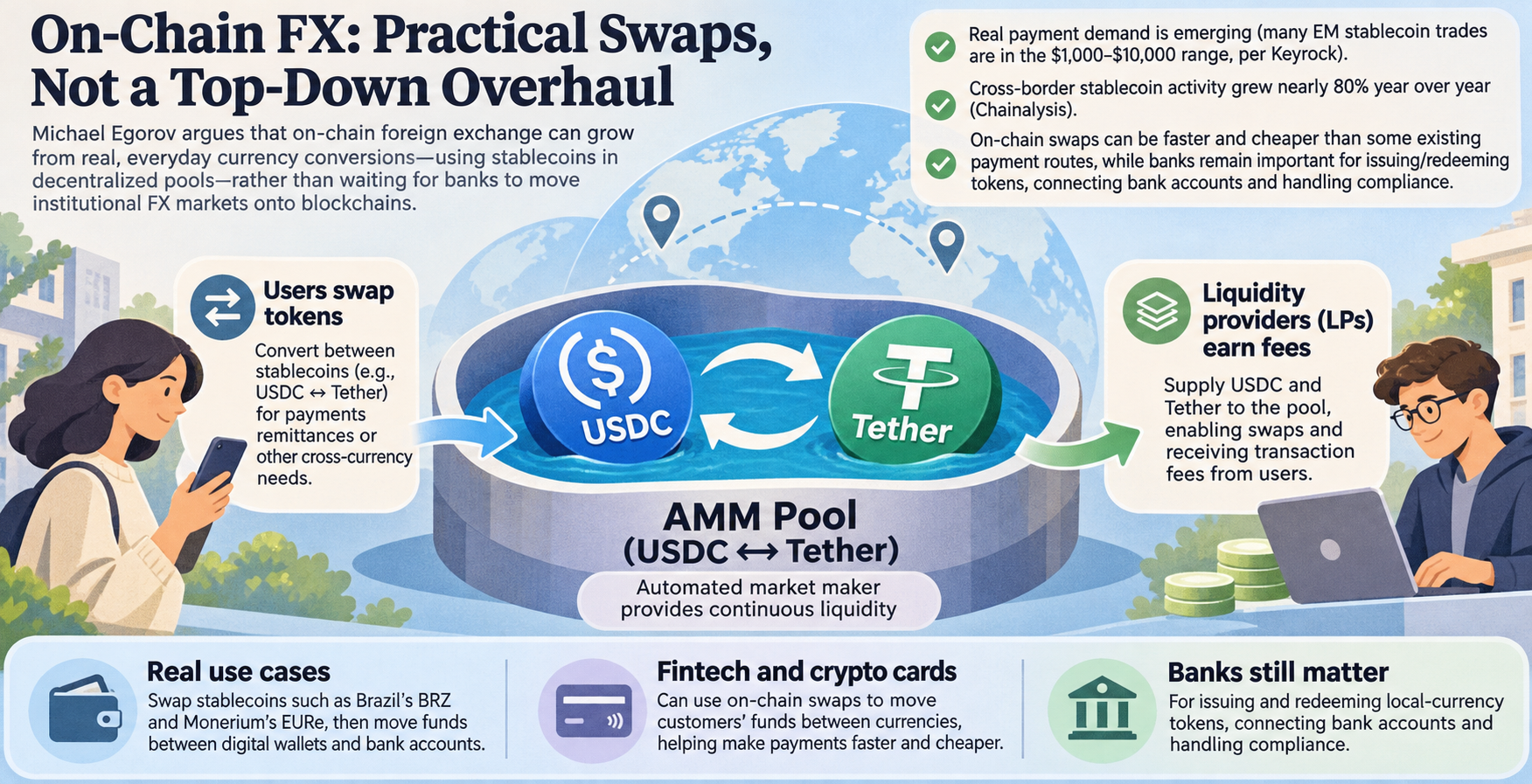
On-chain foreign exchange may grow from small, practical conversions rather than from banks moving institutional FX markets onto blockchains. That is the argument Michael Egorov, founder of Curve Finance and Yield Basis, made in an essay published on November 24, 2026. It is a view of how the market could develop, not a claim that on-chain FX already rivals traditional FX.
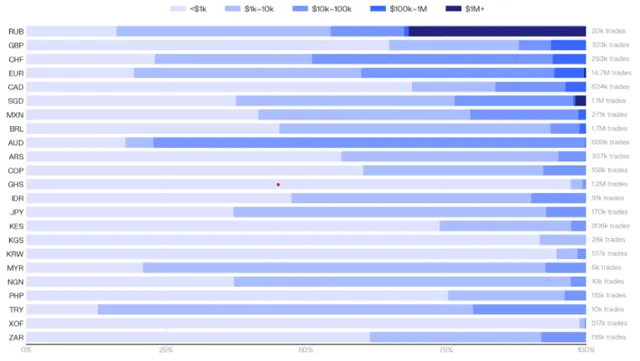
Egorov points to stablecoins such as Brazil’s BRZ and Monerium’s EURe as examples of tokens users can exchange in decentralized pools and move between digital wallets and bank accounts. Citing Keyrock data, he says most on-chain stablecoin trades involving emerging-market currencies fall between $1,000 and $10,000. To him, those relatively small transactions suggest demand for currency conversion tied to payments, rather than only institutional trading.
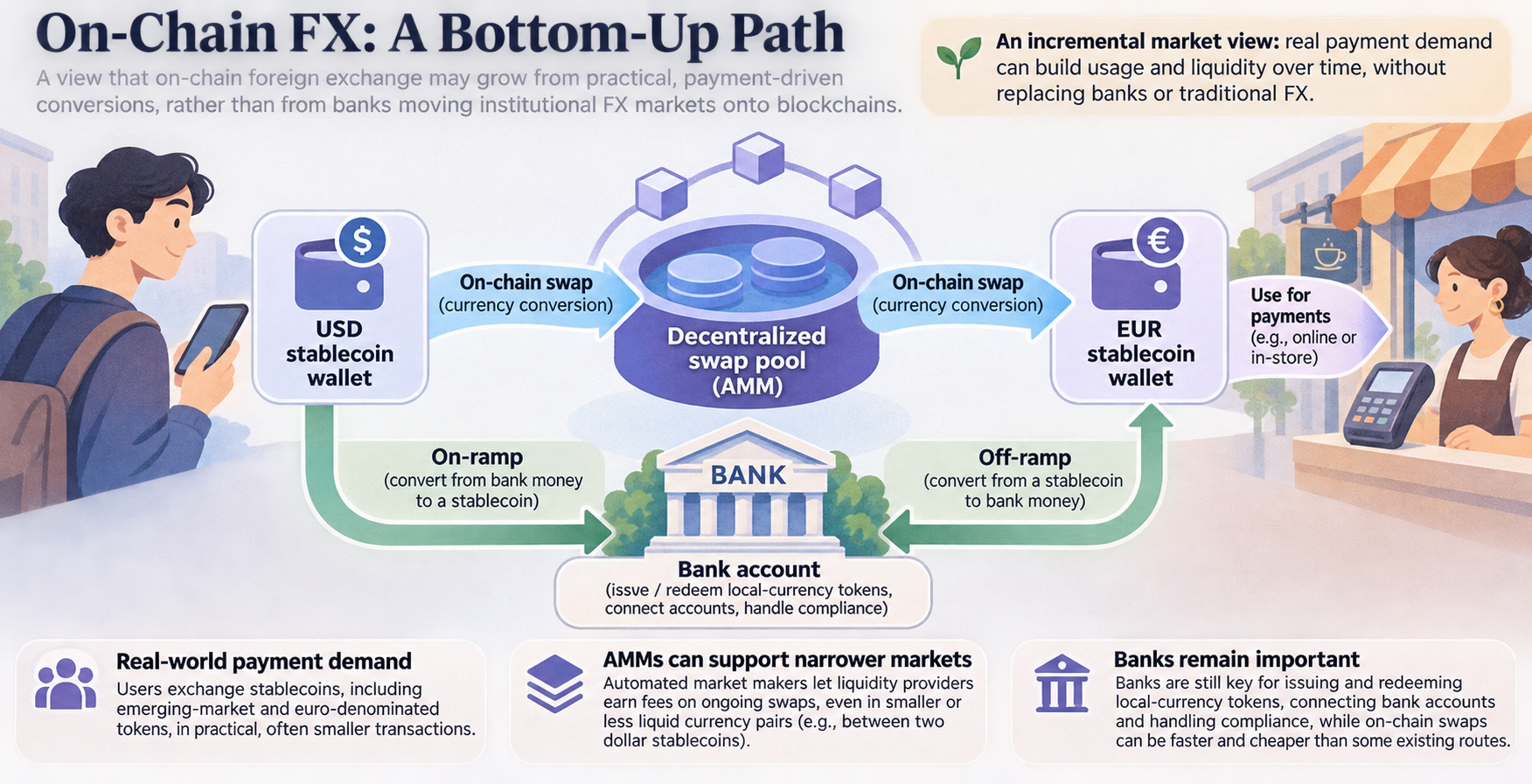
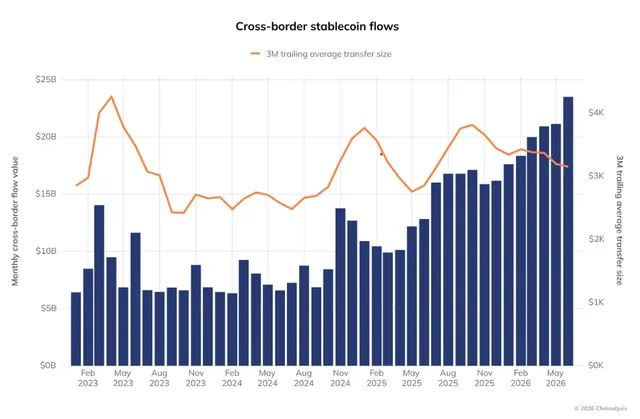
He also cites Chainalysis data showing that cross-border stablecoin activity grew nearly 80% year over year. Egorov argues that fintech and crypto-card providers could use on-chain swaps to move customers’ funds between currencies. He describes such swaps as potentially faster and cheaper than some existing payment routes, while acknowledging that banks would remain important for issuing and redeeming local-currency tokens, connecting bank accounts and handling compliance.
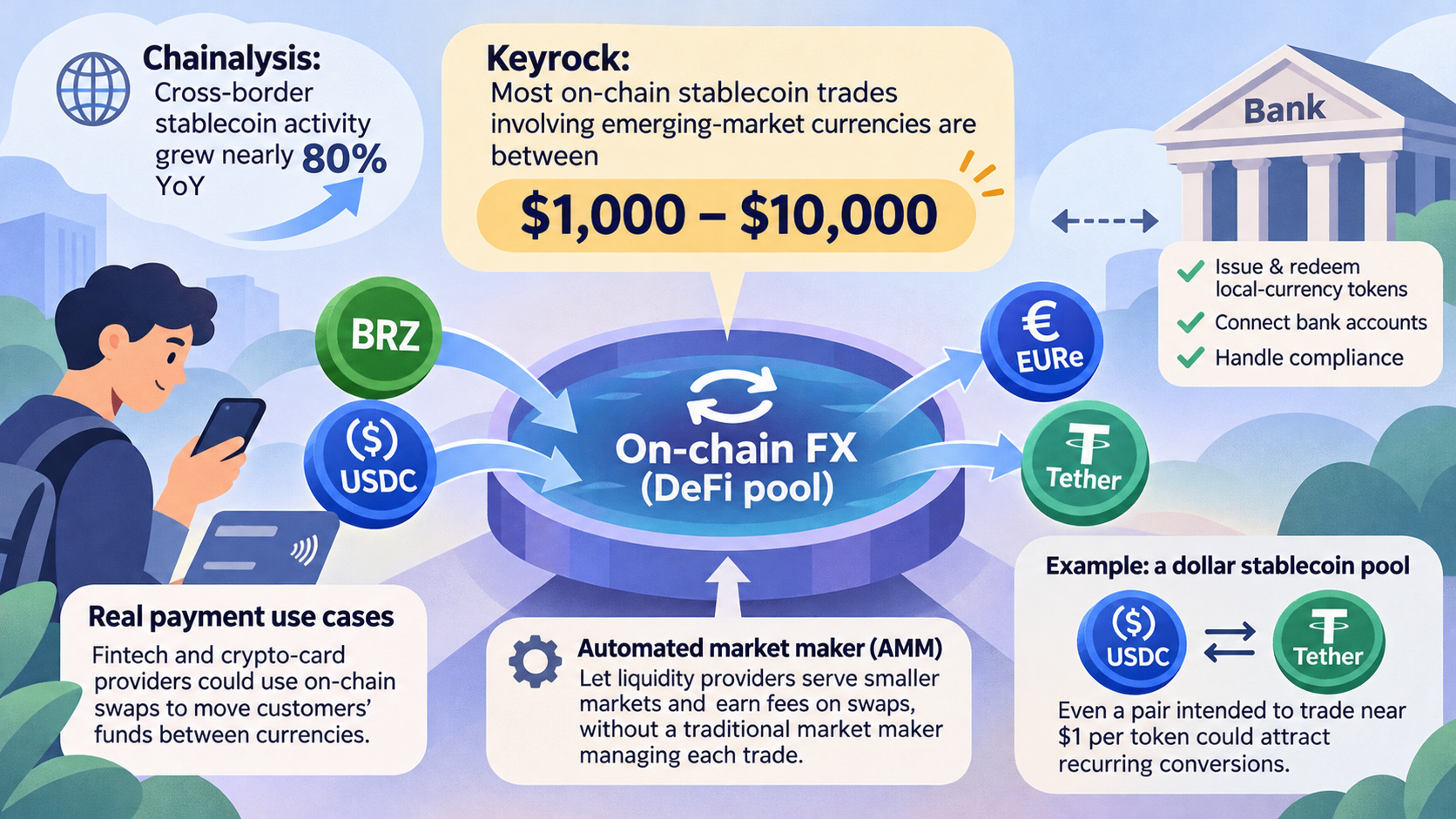
Demand alone, he cautions, does not make a currency pool economically sustainable. Automated market makers could allow liquidity providers to serve smaller markets and earn fees on swaps without a traditional market maker managing each trade. His example is a pool exchanging two dollar stablecoins, USDC and Tether: even a pair intended to trade near $1 per token could attract recurring conversions.
The question in Egorov’s account is whether enough use develops to sustain liquidity in each pair. His case for on-chain FX is therefore incremental—not that payment demand removes the need for workable liquidity or reliable routes between tokens and bank money.